BBC Bias

Labour’s sinister Ministry of Truth is a step on the road to dictatorship

Labour’s sinister Ministry of Truth is a step on the road to dictatorship

THE gauleiters of this deeply inept and sinister Labour government are now pushing for legislation which could become the biggest threat to free speech in this country’s modern history. Their target is the public square. Their weapon is the news feed. Their excuse is ‘trusted news’.

Among the final utterances of failed Prime Minster Sir Keir Starmer is that Labour is considering forcing social media companies and platforms such as YouTube to give greater prominence to ‘public service journalism’. Strip away the velvet language and the meaning is brutal. Private companies are to be ordered to push state-approved broadcasters in front of the public while newspapers, independent journalists, online creators, sceptics and dissenters are shoved down the digital staircase.

In the old world, censorship meant police at the printer’s door and shadowy ‘D’ notices. In the digital world, it adopts the newspeak of safety and is enforced through algorithm. The modern censor does not have to resort to the frenzied book-burning of Fahrenheit 451. He does not need to ban your website. He buries it beneath ‘trusted’ sources. He does not need to criminalise dissent on Net Zero, immigration, Gaza, covid, Brexit or the BBC itself. He ensures the approved version appears first and the dissenter disappears.

That is what is what this wretched Labour government is now heading towards.

Labour says the public must be helped to ‘discover trusted news sources’ and protected from misinformation. Every regime that wants to control speech says the same thing in its own language. Then the machinery is built and the labels are applied. This is the road to savage dictatorship.

The British people did not vote to have their news feeds managed by Labour ministers and their lackeys at Ofcom and the Department for Culture, Media and Sport. They did not vote for the BBC to be enthroned as the official guardian of truth, or for a government with no mandate for its full Net Zero extremism to rig the information system against those who challenge it.

That is the real issue. This is not about helping people find reliable journalism. It is about protecting a dangerous, authoritarian government from scrutiny. On Net Zero, the public are being marched towards higher bills, weaker industry, reduced energy security and national impoverishment by politicians who behave as though the argument is over. It is not over. It has barely begun. The costs, assumptions, trade-offs and fantasies of Net Zero should be exposed daily.

Instead Labour wants a Big Brother regime in which the BBC is pushed to the top of the feed. For at least 40 years the BBC has not been a beacon of truth. It has become the leftist house broadcaster of establishment prejudice. It disgracefully substitutes the worldview of its own class for the desire of the nation. Again and again, on the defining issues of our time, it has not reported reality. It has arranged reality.

On Net Zero, the BBC treats a gigantic political and economic project as though it were holy writ. Costs are softened. Dissent is pathologised. Sceptics are framed as cranks or deniers. The destruction of energy security is presented as virtue. De-industrialisation is sold as progress. The public are not invited into an argument: they are inducted into a faith.

On Brexit, the BBC turned the largest democratic instruction in British history into a years-long exercise in institutional grief. The constitutional case for self-government was buried under elite forecasts, business anxieties and Remainer assumptions. The voters had spoken, but the BBC carried on broadcasting as though the grown-ups needed to repair the damage.

On immigration, it has for years filtered public concern through a moral lens designed to make restriction look hard-hearted and liberalisation humane. Numbers, housing, wages, public services, cohesion and national identity are treated not as the legitimate concerns of citizens, but as awkward material to be processed by experts.

On Gaza, the corporation’s record has been grotesquely distorted by questions about framing, sourcing and moral balance. This is the sort of output Labour apparently wants elevated as an antidote to ‘misinformation’.

On the trans debate, the leaked Michael Prescott memo found that the BBC’s LGBT desk had subjected coverage to ‘effective censorship’, with stories departing from a hyper-progressive line seemingly ignored. This is not public service journalism. It is ideological gatekeeping via an enforced telly tax.

Then there is ‘BBC Verify’, the corporation’s self-anointed truth squad. But who verifies the verifiers? A broadcaster whose deepest bias lies in selection, omission, framing, tone and emphasis cannot wash itself clean by inventing a brand with a forensic name.

This is why Orwell is not a cliché here. In 1984, Winston Smith worked in the Ministry of Truth rewriting the past to fit the Party’s present needs. The terror was not only the lie. It was the destruction of independent memory. Citizens were trapped inside an official version of reality.

Modern Britain is not Oceania, but the direction of travel under Labour is unmistakable. The state does not need a Ministry of Truth when it can build one out of platform rules, ‘trusted news’ labels, BBC Verify, compliant regulators, tame institutions and frightened tech companies. Big Brother did not have artificial intelligence, behavioural science, real-time feeds and global platforms. This government does.

That makes it more dangerous, not less.

The BBC’s defenders claim social media is chaotic, vulgar and full of nonsense. So what? Democracy is chaotic. Freedom is chaotic. The public square, such as Speakers’ Corner, has always contained, in addition to truth-tellers with wisdom and common sense, those who are fools, fanatics, bores, cranks, prophets and liars. The answer to bad speech is not state-preferred speech. The answer is more speech, more challenge, more memory, more rivalry, more exposure and more freedom.

Labour’s plan would do the opposite. It would shrink the space for newspapers, independent journalists and online dissent. It would give official broadcasters an artificial advantage. It would let the government pretend to fight misinformation while helping its ideological allies dominate the feed. This is press regulation by stealth and censorship by ranking.

The public would still be ‘free’ to find other views, just as a prisoner is ‘free’ to admire the sky through bars. Dissent would remain legal, but buried. Opposition would remain possible, but harder to hear. That is perhaps how liberty dies in the algorithmic age: not with a bonfire of books, but with a tweak to distribution.

If the BBC wants trust, let it earn it. If BBC Verify wants authority, let it submit to robust public accountability.

A free people do not need state-approved truth rammed into their faces. They do not need ministers and unaccountable, shadowy state employees deciding which voices rise and which sink. Whatever shape-shifting guise this government now adopts, it must keep its sinister hands off the public square.

How the BBC conspired with open border activists to rig Question Time and ambush Reform
How the BBC conspired with open border activists to rig Question Time and ambush Reform

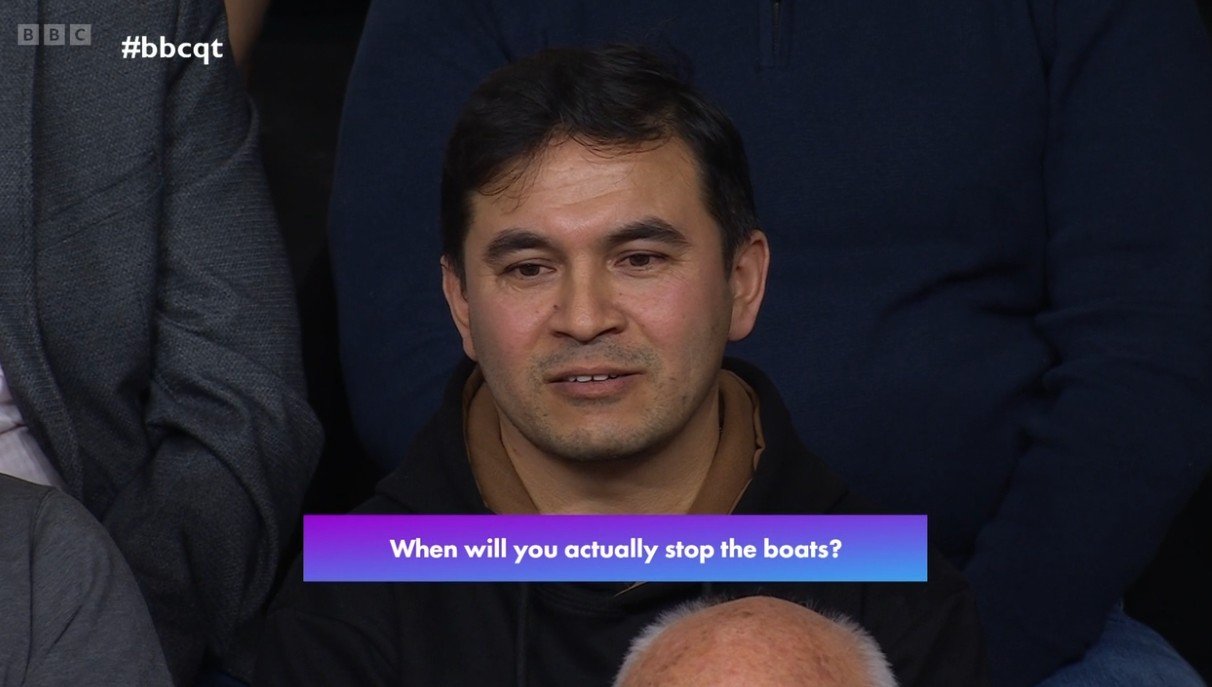
SMALL-boat migrants to the UK who confronted Reform UK’s Zia Yusuf on a BBC1 Question Time immigration special late last year were placed there by pro-immigration campaigners.

That is the devastating central finding of Daily Telegraph investigation: the Corporation’s flagship current affairs programme, which is supposed to reflect public opinion, was rigged.

In the audience were two asylum seekers who vociferously challenged Yusuf, then Reform’s policy chief. With the BBC’s knowledge, they had been coached by IMIX, a campaigning charity which boasts that its mission is to welcome immigrants and build support for migration. One read a prepared statement from his phone.

Also with the BBC’s knowledge, IMIX’s chief executive, Jenni Regan, was in the audience and was selected to speak against reducing immigration. The charity later described the programme as an opportunity to ‘test some of our messaging directly’ on what it calls the ‘mixed middle’ or ‘persuadable’ public.

Yusuf claimed in the programme aftermath that he had been crudely ambushed. More than 1,000 viewers complained. The Daily Telegraph has now shown that the essence of his complaint was true.

The BBC’s own fortnightly complaints report later put the total at 1,379. It rejected the charge of bias in a single collective response, arguing that 20 audience members had contributed views from across the immigration debate and stressing that the two men had been granted refugee status and were living in Britain legally.

That response closed the complaints process without examining or disclosing the part played by IMIX in identifying and preparing the two men, or the fact that its chief executive had also been selected to speak. The Telegraph’s revelations therefore expose how incomplete and disingenuous the BBC’s answer to those 1,379 complainants was.

How deeply arrogant and complacent is that?

The full scale of the rigging remains unknown because the BBC has refused to reveal how the rest of the audience was chosen.

How many other members were recruited through campaign groups? How many were selected directly by the BBC because producers knew what they were likely to say? Which organisations were approached? How many people did each provide? Were any bodies campaigning for lower immigration given the same access? Who approved the final list, and according to what political hocus-pocus?

The BBC has refused to answer any of this.  Instead, it has issued the usual incantation that it contacted a range of organisations, sought different perspectives and retained ‘full editorial control’. That is supposed to end the matter. In fact, it makes the Corporation’s responsibility absolute.

Question Time in this context is fraudulent fiction: a managed political operation is being passed off as spontaneous public opinion.

Before anything the BBC says about the programme can be believed, it must publish its audience-selection procedures in full. It must identify every organisation involved in constructing the Dover audience, state how many potential participants each nominated, explain who selected those eventually admitted and disclose how producers supposedly ensured political balance.

It must also say whether this is normal Question Time practice. Until those questions are answered, nobody can know where the public audience ended and the BBC’s political construction began.

The treatment of Yusuf makes the episode more serious still. Reform is a major political force that could form the next government. Yusuf is one of its most senior figures and could hold high office if the party enters government. Yet the BBC conspired against him. That was an act of profound political disrespect.

I have personal experience of what Question Time was meant to be. Between 1983 and 1985, when I was BBC Television’s News and Current Affairs publicity officer, it was one of my programme responsibilities. I came to know well its formidable founder editor Barbara Maxwell. Its authority rested on the principle that politicians were being tested live for the first time on British television before a genuine public audience. I suspect she would be turning in her grave at what the programme has now become.

The most alarming aspect of the Dover ambush is that the BBC has every reason to expect to get away with their manipulation.

Immunity from such scrutiny has been hard-wired into the regulatory system since Ofcom assumed responsibility for regulating the BBC at the beginning of 2017 when its current Charter took effect.

News-watch’s first Question Time complaint in 2017 under that regime concerned the programme’s treatment of Brexit. Viewer Gavin Hunt had painstakingly tracked a complete season of 25 editions. He found that 22 panels had Remain majorities, eight had four Remain supporters to one Leave supporter and only two had Leave majorities.

It was precisely the sort of systematic evidence needed to test whether the programme’s selection procedures were producing sustained political imbalance. With wearing predictability, the BBC Executive Complaints Unit rejected it.

News-watch referred the case to Ofcom, the supposedly independent final arbiter. Ofcom refused to examine the 25 programmes, claiming that doing so would not be ‘proportionate’. It selected only two. Which clown at the regulator authorised that? One was a special edition following the Manchester Arena bombing and contained no meaningful Brexit discussion. The whole season’s evidence was therefore reduced to one relevant programme. The edition chosen had a panel overwhelmingly composed of people who had supported Remain. Ofcom nevertheless decided that the MP Damian Green had represented Leave ‘with vigour’. Green had campaigned for Remain. But because he was a Conservative minister defending the Government’s obligation to implement the referendum result, Ofcom converted him into a Brexit advocate. It was regulatory sophistry. Accepting that a democratic result had to be implemented was not the same as believing in Brexit or presenting the positive case for it.

Most significantly, Ofcom declared that going forward, it had no role in deciding how Question Time selected its panels or audiences. Those were editorial matters for the BBC. That was a huge get-out-of-jail-free card. It meant that BBC could select its audiences behind closed doors and it confirmed that the Corporation remained judge and jury in its own cause. Ofcom did not give a damn.

The Dover immigration special is where that system has led. A pro-immigration campaigning charity helped place and prepare two small-boat migrants to challenge Reform’s policy chief. Its chief executive was also selected to speak. The charity regarded the appearance as an opportunity to test its messaging. The BBC disclosed none of this and still refuses to explain how the rest of the audience was constructed.

It plainly expects the familiar formula to work again: issue a vague assurance about editorial control, disclose nothing of substance and wait for Ofcom to conclude that audience selection is a matter for the BBC.

That cannot be allowed to happen. The BBC must publish the complete details of the Dover programme and reveal how often campaigning organisations have helped populate other Question Time audiences. Until it does, viewers should treat Question Time’s claim to represent public opinion with the deepest suspicion. The Dover programme was not an open public debate. It was a biased production whose flagrantly skewed casting decisions remain hidden from the people watching it.

BBC admits Brexit bias – then attacks the critics who exposed it
BBC admits Brexit bias – then attacks the critics who exposed it

FOR the first time in News-watch’s 27 years of monitoring the BBC, the Corporation has partially upheld a complaint about EU-Brexit coverage. ‘Partially’ is crucial in showing the contortionist nature of its accountability.

The BBC’s Executive Complaints Unit (ECU) accepted that flagship Radio 4 Today programme breached impartiality by presenting the case for closer alignment with the European Union without acknowledging the opposing argument for making fuller use of the freedoms provided by Brexit. But Fraser Steel, head of the ECU, rejected the greater part of the complaint by endorsing the gross bias underlying the programme.

When the Daily Telegraph reported the ruling on Friday and exposed that contradiction, the BBC did not address it. Instead, in its right of reply, it reverted to the stonewalling it usually adopts when addressing complaints. It defended Steel and dismissed criticism of his reasoning. Move along, folks, nothing to see.

The News-watch complaint was based on the Today programme’s handling of Governor of the Bank of England Andrew Bailey’s Mansion House Speech on November 15, 2024. He argued that Brexit was one of the main reasons the British economy was not performing as well as it could or should.

News-watch argued that the sequence constructed was totally biased in favour of Bailey’s anti-Brexit stance.

Katya Adler, the BBC’s Europe editor, reported that Bailey was ‘not alone in pointing the finger at Brexit’. She interviewed two contributors who broadly supported his analysis.

The first was Sir John Gieve, a former deputy governor of the Bank of England. He cited estimates suggesting Brexit would reduce GDP by between 4 and 6 per cent and described this as the consensus among experts. Yet he also conceded that measuring Brexit’s economic effects was ‘extremely difficult’ and that economic models were poor at measuring major shocks.

That should have prompted rigorous questioning. Britain’s economy had also been affected by covid, the war in Ukraine, energy prices, inflation, interest rates and domestic policy. Estimates of Brexit’s impact depend heavily upon counterfactual models comparing the real economy with a hypothetical Britain which remained in the EU.

Adler, however, did not explore further those uncertainties Instead, the discussion moved towards closer relations with Brussels.

The second contributor was Liam Byrne, Labour MP and chairman of the Commons Business and Trade Committee. He advocated reducing trading friction, aligning agrifood standards, considering a youth mobility agreement and developing closer economic relations with the EU.

In sum, Bailey supplied the diagnosis that Brexit had damaged Britain, Gieve reinforced it with economic estimates, and Byrne proposed remedies based on closer EU alignment.

The programme did not include a contributor who articulated the alternative case. No one argued that Britain might improve its prospects through regulatory freedom, independent trade policy or fuller use of powers returned from Brussels. Nor did the programme test whether poor post-Brexit government decisions should be treated as proof that Brexit itself had failed.

News-watch’s complaint, submitted in December 2024 and elevated to the ECU in March 2025, was not a crude demand for equal numbers of leave and remain supporters. It challenged the entire editorial construction: the premise, the guests, the questioning and the range of policy options listeners were allowed to hear.

The BBC took an astonishing 18 months to resolve it, issuing Steel’s final ruling on June 4.

Steel rejected several central elements. He said Adler had merely summarised Bailey’s speech, and that the shared outlook of the two guests was not itself a breach. Most importantly, he found no failure of impartiality in their ‘shared assumption’ that Bailey’s diagnosis was broadly correct. He said this reflected the predominant view among economists and that he had found no significant body of opinion suggesting Brexit’s effects had been positive or neutral.

That was the basis on which most of the complaint was rejected.

Steel nevertheless ruled that the programme did breach impartiality when discussing the remedy. It had assumed that the answer lay in closer EU alignment without acknowledging the alternative argument that Britain could improve its performance by exploiting opportunities outside the EU and its regulatory system.

He concluded that the competing arguments were so clearly controversial that the item should at least have acknowledged the alternative case. The complaint was therefore partially upheld, and Steel apologised on behalf of the BBC.

This was a significant concession: the ECU accepted that a flagship BBC programme had discussed a central question about Britain’s economic future from only one side.

But Steel separated the diagnosis from the remedy. He accepted that the remedy required an alternative perspective while ruling that the diagnosis of Brexit damage did not.

That distinction is hard to sustain. The programme began with the proposition that Brexit was a major cause of weak performance, reinforced it with two sympathetic contributors, and moved to closer alignment. Once Bailey’s analysis was treated as settled, the direction was predetermined.

Steel’s invocation of an economic consensus did not answer this objection. If anything, it reinforced it. A predominant view is entitled to coverage, but it does not turn model-based estimates into directly observable fact or remove the BBC’s duty to test consequential claims.

Nor does it prove that there is no serious argument about the scale and causes of the effects, the policies adopted since Brexit or the opportunities leaving the EU created. Gieve’s own warning that measurement was extremely difficult should have made the BBC more cautious, not less.

The Daily Telegraph rightly focused on this reasoning. News-watch was quoted as saying the complaints process had ‘bent over backwards’ to explain away the rest of the imbalance.

The BBC’s answer as reported in the Telegraph piece was revealing. A press office spokesman declared: ‘The BBC has no view on the economic impact of Brexit, and nothing in this finding suggests otherwise.’ But the spokesman immediately defended Steel by citing ‘the consensus among economists’ as a reason for rejecting that part of the complaint. The contradiction is obvious. The BBC said it has no view, yet relied upon one economic assessment to decide that Bailey’s diagnosis required no substantive challenge.

That is not neutrality. It is the treatment of one disputed view as the neutral baseline.

The BBC also defended Steel’s experience and the independence of the ECU. This was irrelevant. The criticism was not that Steel lacked experience or had been instructed what to conclude. It was that his reasoning was inconsistent and rested on assumptions which were themselves under challenge. Instead of confronting that criticism, the BBC invoked the credentials of its official and the status of its process. That is a text-book example of how an institutional confirmation-bias bubble protects itself. On Brexit, the negative interpretation is repeatedly treated as expert analysis, while the alternative is treated as political advocacy requiring special justification. The same culture then adjudicates complaints about the resulting output.

News-watch has spent 27 years documenting this process through about 70 detailed reports. The BBC has never properly engaged with that systemic evidence. Its complaints arrangements confine challenges to individual programmes or narrowly linked sequences, excluding evidence of recurring patterns across hundreds of broadcasts. In effect, the system inspects individual bricks while refusing to look at the wall.

That makes this partial upholding a painful climbdown for the Corporation. Is that why it took 18 months for the ECU to arrive at this ruling? The BBC has finally accepted with all the grace of a sulky child that a Brexit item was biased because it airbrushed out of the equation pro-Brexit opinion.

The ruling also exposes the deeper problem. Steel accepted the omission at the point of remedy while endorsing the assumption which drove the item from its opening sentence. When challenged, the BBC defended Steel and repeated the very consensus argument under dispute.

The BBC has finally partially admitted to News-watch Brexit bias. That is a landmark. Its reaction shows why it took 27 years to arrive there.

Hamas critic sacked, Hamas fans get a slap on the wrist at two-tier BBC
Hamas critic sacked, Hamas fans get a slap on the wrist at two-tier BBC

THE BBC insists that its journalism is impartial. According to a report in the Daily Telegraph , former local radio reporter Sean McGinty’s treatment by the Corporation suggests that instead, impartiality has become a crude instrument of institutional discipline, applied most ferociously against its own staff who do not conform to its worldview .

McGinty, 61, a former BBC Radio Lancashire presenter, was dismissed for gross misconduct after criticising the Corporation’s refusal to describe Hamas as terrorists following their savage massacre of Israelis on October 7, 2023. He also attacked the BBC’s use of casualty figures originating with Hamas and accused it of having a ‘fear of the word terrorist’.

The Telegraph reported that the sacking – confirmed in February this year after he appealed against an industrial tribunal ruling – seriously affected his mental health but it has since improved and he now wanted to speak up about his treatment by the Corporation.

His central point which led to his dismissal was a grave accusation. Hamas is a proscribed terrorist organisation in Britain. Its gunmen have for years murdered civilians, taken hostages and committed acts of calculated barbarity. McGinty lost his career for simply stating the obvious.

At almost exactly the same time, six BBC Arabic journalists were investigated over social media activity which appeared to justify or celebrate the October 7 attacks. None was dismissed. They were reportedly given advice and required to undergo impartiality and social media training.

That huge discrepancy in treatment is a question the BBC must answer. It is also the issue that the BBC press office response to the Telegraph conspicuously avoided.

The Corporation said simply that McGinty had been dismissed for gross misconduct and that an employment tribunal had rejected his claims. That may have established that the BBC probably adhered to the letter of employment law. But it had nothing to do with whether BBC acted consistently, fairly or impartially as a journalistic institution.

An employment tribunal is not an inquiry into the BBC’s editorial culture. It does not determine whether the Corporation applies different standards according to the political direction of an employee’s opinions. Nor does it show that the BBC’s underlying policy on Hamas was editorially sound. The tribunal’s ruling therefore cannot dispose of the central question: why did criticism of the BBC’s handling of a terrorist organisation attract dismissal, while apparent sympathy for the organisation’s atrocities did not?

The imbalance is startling.

Had McGinty praised or excused Hamas while colleagues were dismissed for objecting, the BBC would rightly have faced uproar. Yet because the disciplinary direction ran the other way, the Corporation appears to believe that invoking ‘gross misconduct’ and citing a tribunal judgment is sufficient.

It most certainly is not.

News-watch has spent 27 years exposing this same institutional reflex. The BBC rarely confronts evidence of bias on its merits. Instead, it retreats behind process, technical distinctions and the authority of its own internal machinery. The complaint is narrowed. The wider evidence is excluded. The critic’s language, motivation or status becomes the subject of scrutiny. The Corporation itself remains the judge and jury of whether the Corporation has behaved properly.

McGinty’s case is a particularly stark example because it concerns not only output, but the policing of opinion inside the BBC.

The message to employees is as subtle as a brick. Those who remain within the Corporation’s accepted ideological boundaries may expect mistakes or inflammatory comments to be treated as correctable lapses. Those who publicly challenge the editorial consensus risk being treated as threats to the BBC’s reputation.

McGinty himself compares his treatment to a dead sparrow nailed to a fence as a warning to the others. The image is brutal, but it captures the wider significance of the case. His dismissal sent the message of the grave possible consequences for any BBC employee who publicly questions the institution’s editorial orthodoxy.

That is deeply concerning because impartiality depends upon internal argument. A broadcaster claiming to serve the whole country ought to welcome journalists who test fashionable assumptions, challenge euphemistic language and ask whether leftist metropolitan editorial judgments make sense to audiences outside London.

Instead, McGinty describes a culture in which dissent is suppressed and managers confuse protection of the BBC’s reputation with protection of its prevailing worldview.

His account of how local radio operates is also revealing. He alleges that, before the 2016 referendum, a producer refused to allow a caller worried about immigration’s impact on public services to go on air because she was deemed ‘racist’. His allegation is wholly consistent with patterns repeatedly identified by News-watch: legitimate public concerns are too often interpreted through the leftist political and moral assumptions of BBC staff before they are permitted to reach the audience.

The BBC’s problem is not simply that it contains biased individuals. Every large organisation contains people with a multiplicity of opinions. The deeper problem with the BBC is that one variety of opinions has become entrenched. Those who share it may not even recognise it as political. They are locked in confirmation bias and firmly believe they are defending decency, accuracy and responsible journalism.

Views outside that consensus, however, are treated not as alternative judgments deserving fair examination, but as reputational hazards.

That helps explain the grotesque disparity at the heart of the McGinty affair. BBC Arabic journalists whose social media activity appeared to support or excuse Hamas could be regarded as having made errors requiring guidance. A loyal, hard-working, deeply conscientious local radio journalist who accused the BBC itself of failing to identify terrorism was treated as having placed himself beyond the pale.

That contrast tells us more about the BBC’s gross failure to understand the true nature of impartiality than any number of its blizzard of self-commissioned and self-justifying corporate reviews, managerial assurances or carefully drafted statements.

A BBC Director General to take on Netflix but not to root out bias
A BBC Director General to take on Netflix but not to root out bias

THE post of Director General of the BBC has, over the past two decades, become a poisoned chalice.

Greg Dyke was forced out in 2004 by editorial failings in coverage of the war in Iraq; George Entwhistle was disgraced by his mishandling of the Jimmy Savile fall-out in 2012; Tony Hall was engulfed in 2020 by his allegedly dishonest handling of the Panorama interview of Princess Diana, as chronicled in the book Dianarama, and most recently Tim Davie was pushed into resignation in November last year because of gross editorial failings which led to a $5billion (£3.74billion) libel claim against the BBC by President Donald Trump.

Davie’s dramatic exit – he finally leaves at the end of March – has crystallised what is starkly evident to audiences: the BBC’s gravest problem is that its editorial processes are hugely inadequate. Further, that a large and growing proportion of the public no longer trusts the BBC to be impartial or to reflect accurately Great Britain and its values.

Into that breach now steps Matt Brittin. Who? The appointment by the BBC Board – though not yet fully confirmed – is being framed in some quarters as bold. Here is a man forged in the world of Google, who rose to become its president for Europe, the Middle East and Africa. He is steeped in the dynamics of the digital age and obviously plugged into the tectonic shift in audience behaviour towards platforms such as YouTube and Netflix. The BBC is naturally deeply worried by such threats and keen to adapt to the fast-changing media environment. Younger audiences are drifting away; the old certainties of scheduled broadcasting are dissolving; the Corporation fears being left behind.

But Brittin’s appointment suggests a profound – and potentially catastrophic – misdiagnosis of what is wrong.

The BBC’s crisis is not primarily digital. It is editorial. In that context, the most striking fact about Brittin is not what he has done, but what he has not. He has no background in broadcast journalism, no experience as an editor, and no track record in the culture of a newsroom. The BBC Director General is not merely a chief executive: he is, in effect, editor-in-chief of the most powerful news organisation in the country, if not the world. To appoint someone with no grounding in that discipline is astonishing. It goes to the heart of whether the BBC understands its own predicament.

Across almost every major area of public controversy – Brexit, Net Zero, the trans debate, and coverage of conflicts such as Gaza – substantial sections of the audience believe that the BBC has an axe to grind. Bucketfuls of systematic research, which the Corporation refuses to even consider, spell out the extent of the rot. Alternative perspectives are either marginalised or rubbished. One can argue about the fairness of each individual criticism. What cannot be dismissed is their cumulative force.

This massive loss of confidence in BBC integrity is strongly evidenced. Opinion surveys have shown that a majority of the public do not trust the BBC to be impartial, with only a minority believing that it fulfils its core obligation of neutrality.

Yet the BBC complaints process to address such concerns is, in practice, almost entirely ineffective. Over the eight years of this Charter period, News-watch research has shown the BBC has upheld just 38 complaints relating to impartiality out of a total complaints volume running into more than two million. At the same time, Ofcom research has shown overwhelming dissatisfaction with the complaints process itself, with large majorities of respondents expressing little or no confidence in its fairness. Complainants encounter a system that is opaque, defensive and circular: the BBC assesses its own output, on its own terms, and almost invariably finds itself in the right.

External oversight by Ofcom, introduced at the start of the current Charter, has done little to alter that picture. Interventions have been rare, narrowly framed, and confined to individual programmes rather than systemic patterns. The BBC is, to a remarkable degree, judge and jury in its own cause.

Worse still, complacency and head-burying are now entrenched in defence of this chronically dysfunctional system. In December, following an internal editorial review conducted in the wake of the Prescott dossier and other mounting criticisms, the BBC Board chose explicitly to maintain the status quo. Move along there, nothing to see. Despite the massive accumulation of evidence pointing to systemic problems in both editorial culture and complaints handling, it concluded that existing processes were adequate and required no substantive reform. That decision amounted to a doubling down on the very structures that have produced the current crisis.

It is against this background that the cultural dimension of Brittin’s appointment becomes relevant. As former BBC producer and news executive Robin Aitken reported this week, his only media experience is in strongly left-leaning publications. His media-related career began in the late 1990s as head of digital strategy with the Trinity Mirror group. At the beginning of last year, he was appointed a non-executive director of the Guardian Media Group – surely now a conflict of interest. That does not, in itself, disqualify him, but it does matter in an institution already widely perceived as being strongly left-leaning. The BBC does not need a leader who slots into its existing worldview; it needs one who can rigorously challenge it from a position of strength, ability and experience. Dyke, Entwhistle, Hall and Davie all failed because they ducked out on that task.

Here, some insight from those who have worked with Brittin is illuminating. He is described as highly intelligent, ambitious and politically astute, with a strong awareness of hierarchy and status. He could be personally charming when required, but also projected a sense – shared by those around him – that he and his team were operating at a level above the wider organisation. That kind of leadership can be highly effective in corporate environments. But it can also foster a culture that is internally cohesive and sharply cut off from the real world.

And that is precisely where he may fail.

Meanwhile, the political context is shifting in ways that raise the stakes still further. Culture Secretary Lisa Nandy, who is in charge of BBC Charter renewal, has suggested that the next renewal might become permanent, likening the Corporation to the NHS as a national institution to be protected indefinitely. If that were to happen without fundamental reform of accountability, it would entrench the very system that has allowed these problems to develop: a powerful public body, funded by a compulsory levy, operating with minimal effective external scrutiny.

In that light, the central question facing Brittin becomes unavoidable. What is the new Director General for? Is he there to reposition the BBC within a global digital marketplace, competing with Netflix and adapting to the logic of Google? Or is he there to restore trust in the BBC as an impartial national broadcaster, accountable to the public that funds it?

The two tasks are not the same. One is about survival in a changing media economy. The other is about legitimacy and trust in a democratic society.

Brittin may be well equipped to address the first. There is, as yet, little evidence that he has been chosen to confront the second. And until that changes – until impartiality is treated by the BBC not as a slogan but as a discipline, and accountability as a major necessity – the poisoned chalice will remain exactly that.

Will Lisa Nandy take this golden opportunity to end BBC bias?
Will Lisa Nandy take this golden opportunity to end BBC bias?

THE deadline for submissions to the Government’s consultation on the renewal of the BBC Charter has closed.

Culture Secretary Lisa Nandy must now find ways to purge the massive structural bias which has infected the Corporation for decades.

What are the chances that this Government will act in the public interest and improve BBC accountability? Practically nil.

If Nandy opts for the status quo, the BBC will almost inevitably die, drowned in its own complacency, woke agitprop and overt political campaigning on issues such as Net Zero and Brexit.

Former Director of BBC Television Danny Cohen neatly summed up the crisis this week. He said that a succession of editorial controversies has corroded public trust and left the Corporation struggling to maintain the reputation for balance on which its authority has historically rested.

The handling of impartiality, of course, reached crisis point in the autumn when both Director General Tim Davie and BBC News chief Deborah Turness dramatically and ignominiously resigned after they faced mounting evidence of editorial failures contained in the dossier compiled by independent BBC editorial adviser Michael Prescott.

In mid-December the BBC, despite the deluge of evidence of bias, insisted that it would not alter the complaints and accountability system, maintaining that the existing editorial structure and complaints handling processes – in which it acts as its own judge and jury on the vast majority of complaints – already provided adequate scrutiny.

This was the usual BBC bloody-minded intransigence in response to criticism. Carry on regardless.

It is against that background that a major new investigation by my media monitoring organisation News-watch, founded with Kathy Gyngell, submitted to Department of Culture Media and Sport as part of the Charter renewal consultation, has particular significance. The survey painstakingly reconstructs for the first time how complaints about BBC journalism have been handled during the current Charter period, from 2017 to 2025.

The stark facts speak for themselves. The BBC’s handling of complaints is a national disgrace and makes a mockery of audience concerns and accountability.

Between 2017 and 2025 the BBC received 2,275,387 complaints from licence fee-payers. Over the same period Ofcom, the statutory regulator of the Corporation, recorded just four breaches of the Broadcasting Code against the BBC, and only one of those breaches related to the issue that generates the greatest volume of public concern: failures of due impartiality.

Ofcom became the regulatory body overseeing the BBC at the start of the current Charter. The then Conservative Culture Secretary John Whittingdale believed it would make the BBC more accountable. The News-watch survey proves beyond doubt that this was pie-in-the-sky nonsense. Instead the two organisations arguably conspire together to keep the public at bay.

The figures involved have never previously been assembled in a single official account. Finding them took more 1,000 hours of trawling through Ofcom annual reports, BBC publications and hundreds of rulings issued by the BBC’s Executive Complaints Unit. Neither the BBC nor Ofcom – despite the major emphasis in the Charter on impartiality – publishes a coherent, transparent and easily accessible dataset showing how complaints move through the system from initial submission to ruling.

Once the figures are brought together, the structure of the complaints system becomes clear. It is a process in which massive audience concern is progressively filtered through internal stages of review until only a minute number of cases reach regulatory scrutiny.

Out of the more than 2.27million complaints submitted 2017-2025, only 4,944 progressed to the Executive Complaints Unit, the BBC’s final internal appeal body within the BBC First complaints framework. Of those cases, just 200 were upheld or partly upheld under the BBC’s editorial guidelines.

The narrowing continues beyond that stage. 1,071 complaints completed the BBC’s internal process and were therefore eligible for consideration by Ofcom. Yet Ofcom opened formal investigations in only nine cases across the entire eight-year period, resulting in just three breach findings.

The issue becomes even more striking when one examines the subject matter of complaints. Independent research by Cardiff University found that 72.9 per cent of complaints to the BBC in 2025 concerned impartiality. In other words, accusations of bias dominate public concerns about the Corporation’s journalism.

Yet during the whole Charter period Ofcom has upheld just a single breach of the Broadcasting Code against the BBC for failures of due impartiality. The BBC has upheld only 38 from tens of thousands of hours of broadcasting.

The BBC claims this as evidence that its journalism is consistently balanced. But the structure of the complaints system suggests another possibility: that the system itself is incapable of examining the kind of bias critics believe exists.

Under the BBC First model introduced in the 2017 Charter, complaints must normally pass through the Corporation’s internal procedures before Ofcom will consider them. The BBC therefore acts as the initial adjudicator of complaints about its own journalism and the gatekeeper to regulatory review.

In practice, most complaints are resolved internally at early stages of the process, where little information is published about how decisions are reached. Even at later stages the available data remain fragmented and difficult to interpret because the BBC and Ofcom use different definitions and reporting units. Meaningful scrutiny therefore depends on painstaking reconstruction by external observers.

A further limitation compounds the problem. Both the BBC and Ofcom insist that impartiality complaints can normally be examined only in relation to individual programmes or editorially linked series. Allegations that bias arises cumulatively across months or years of output – using academic analytical tools of the type used by News-watch in its surveys of BBC output – are not allowed.

Instead such concerns must be reduced to complaints about single broadcasts, each examined in isolation from the wider editorial context.

News-watch challenged this absurd restriction in judicial review proceedings in 2019 and again in 2025, arguing that systemic bias cannot logically be tested through isolated programme complaints. Incredibly the courts held that the present framework is lawful under the existing Charter. In that vein, change can happen only through Charter renewal and legislation.

The evidence assembled in the News-watch investigation thus establishes that the system is toothless, useless and biased. Ofcom and the BBC often act in tandem, for example in insisting on the single item complaints rule, thus are institutionally incapable of addressing the type of criticism most frequently made against the BBC.

The result is a huge regulatory paradox. The Press – long criticised for weak oversight – now operates under complaints structures that are more visibly independent than those governing the publicly funded national broadcaster.

News-watch argues that Charter renewal provides Parliament with an opportunity to correct this imbalance by introducing a genuinely independent adjudicatory tier for BBC editorial complaints.

The proposal contained in the News-watch submission is straightforward. A BBC Editorial Standards Adjudicator should be established as a body structurally independent of the Corporation. It would examine complaints after the initial BBC response, publish reasoned determinations and maintain a transparent dataset showing how complaints move through the system. Crucially, it would also have the authority to examine patterns of systemic editorial concern rather than being confined to isolated programme items.

Ofcom would retain its existing enforcement powers under the Broadcasting Code, including the ability to investigate and sanction serious breaches. But complaints would first be determined by a body visibly independent of the broadcaster whose journalism is under scrutiny.

Without such reform the consequences may be predictable. A publicly funded institution that cannot convincingly demonstrate impartial scrutiny of its journalism will inevitably see public confidence continue to erode.

In those circumstances the BBC risks being drawn ever deeper into a sea of its own bias. A survey by Ofcom in 2022 found that only 18 per cent of complainants are satisfied by their experience.

That is the issue now facing Nandy as the Charter consultation closes.

This ‘independent’ review entrenches BBC bias instead of rooting it out
This ‘independent’ review entrenches BBC bias instead of rooting it out

BBC thematic reviews were created by the Board of Management in the aftermath of the Serota Review (2021) into the catastrophic handling of the Princess Diana interview scandal. They were an attempt to restore transparency, impartiality and editorial integrity.

The fourth thematic review, published last Thursday — on ‘portrayal and representation’ — achieves the exact opposite. It shows that the BBC has cynically perfected the art of appearing self-critical while protecting its own massive confirmation bias.

There is a glaring omission in the review: its refusal to confront the Diversity, Equity and Inclusion (DEI) agenda that now animates the BBC with near-religious fervour and has, more broadly, infected the entire body politic.

Astonishingly, the review never names DEI, never interrogates it or regards the institutional agenda as controversial. Instead, it treats diversity and all its associated assumptions as a neutral, unquestionable good rather than a highly partisan ideology with consequences. That silence is the review’s organising principle.

This is especially extraordinary because the BBC for at least a quarter of a century has not been a neutral observer of DEI. It is one of its most enthusiastic institutional champions.  The review itself notes that the BBC has spent £243million on ‘diversity’ content, over double its target.

Further, over many years, the Corporation has embedded diversity targets, recruitment schemes, commissioning incentives, monitoring frameworks and partnerships that explicitly prioritise demographic outcomes. In some cases, white candidates have been excluded from particular schemes altogether. The BBC has publicly partnered with organisations such as Creative Access, the sole purpose of which is to maximise ethnic-minority representation in the creative industries, while showing no interest in research or partnerships that might ask whether such policies create new forms of unfairness or exclusion.

None of this appears in the review. Arguably, it is instead structured to normalise the BBC’s DEI programme while rendering it invisible – beyond scrutiny, beyond debate and beyond complaint.

To understand why, one clue is the duo who penned it. The authors, Anne Morrison and Chris Banatvala, are presented as ‘independent’. But they are not. Morrison is a former senior BBC executive who ran major factual departments and later became Director of the BBC Academy. Banatvala is a former Director of Standards at Ofcom (which, in seven years as the regulator of the BBC, has upheld zero impartiality complaints against it), a past adviser to the BBC Trust, a contributor to the Serota Review itself and an external complaints reviewer for Channel 4. These are not rigorously external auditors working to challenge the BBC’s assumptions from first principles. They are broadcasting establishment insiders by culture and career, steeped in the same confirmation bias and institutional norms as the organisation they are assessing.

That matters, because the review they have produced is written entirely within the BBC’s DEI framework, not about it.

A methodological weakness follows inevitably. The review never clearly defines what it is measuring, how success is judged, or how its conclusions could be challenged. There is no baseline, no transparent weighting of evidence, no systematic analysis of output over time. Instead, it relies on stakeholder interviews, audience sentiment and selective content sampling – the very tools least capable of exposing systemic bias. When the authors state that ‘portrayal’ is subjective by nature, they quietly foreclose the possibility of accountability altogether.

Most damaging of all is the review’s deliberate exclusion of analysis of news and political output. It is not possible to assess how the BBC portrays and represents the UK while excluding the genres that most powerfully shape public understanding of reality: daily news, current affairs, political interviewing, agenda-setting and moral framing. It is precisely in news and politics that DEI ideology exerts its strongest influence – not through casting, but through assumptions about power, victimhood, legitimacy and dissent.

By fencing off this territory, the authors ensure that the review cannot collide with the BBC’s most controversial editorial practices. The inquiry is confined to safer ground — drama, entertainment and abstract ‘communities’ – where progress can always be claimed and failure endlessly deferred.

This explains the review’s near-blindness to the growing distortion of BBC programming. A mild telling-off is aimed at some of the extremities in this domain, for example of ‘tick box’ diversity casting, such as a black Estella in an adaptation of Charles Dickens’s Great Expectations or of a mixed-race actor as Sir Isaac Newton in Doctor Who. But the review does not establish the extent to which this happens, or whether such output misleads audiences, distorts history or undermines trust. It could not do so without questioning the DEI mission itself.

That mission has a long pedigree at the BBC. In January 2001, the then Director-General Greg Dyke set the ball rolling by declaring the BBC ‘hideously white’. By 2015, BBC trustee and diversity adviser Tanni Grey-Thompson was publicly arguing that the Corporation might need to spend £100million to ‘get diversity right’ and that executives who failed to deliver should be fired.

This history is nowhere acknowledged in the thematic review. The BBC’s own ideological commitment and bias is airbrushed out, allowing the authors to pose as neutral arbiters rather than participants in a long-running project.

Taken as a whole, this waste-of-time review does not merely fail to illuminate the BBC’s problems: it actively reinforces the Corporation’s impregnability in terms of claims of bias.

When the BBC was facing serious criticism over its 30-year deception about the Princess Diana Panorama interview of 1996, thematic reviews were sold to the public, Parliament and critics as a shiny new mechanism of accountability. In reality, they have become a means by which the BBC confers legitimacy on its own assumptions while remaining judge and jury in its own cause.

The Corporation commissions the review, defines the terms of reference, selects authors steeped in its own culture, excludes the most sensitive areas of output, and then presents the result as independent validation. Complaints are deflected with the same refrain: ‘We have already examined this’. This is not scrutiny. It is institutional armour.

That is why the review must be read alongside what happened in December, when — after a brief and carefully managed bout of apparent contrition — the BBC Board of Management effectively discarded the Prescott dossier, a detailed and serious body of concerns about systemic failures of impartiality.

It showed that yet again, when faced with substantive external challenge, the BBC’s instinct is not reform but a circling of the wagons.

This latest thematic review is part of that retrenchment. Far from opening the Corporation to renewed honesty, it closes ranks more tightly. It reasserts the BBC’s authority to define what bias is, what diversity means, which questions are legitimate, and which areas are off limits.

‘Dianarama’ – the conspiracy of deceit exposé that should sign the BBC’s death warrant
‘Dianarama’ – the conspiracy of deceit exposé that should sign the BBC’s death warrant

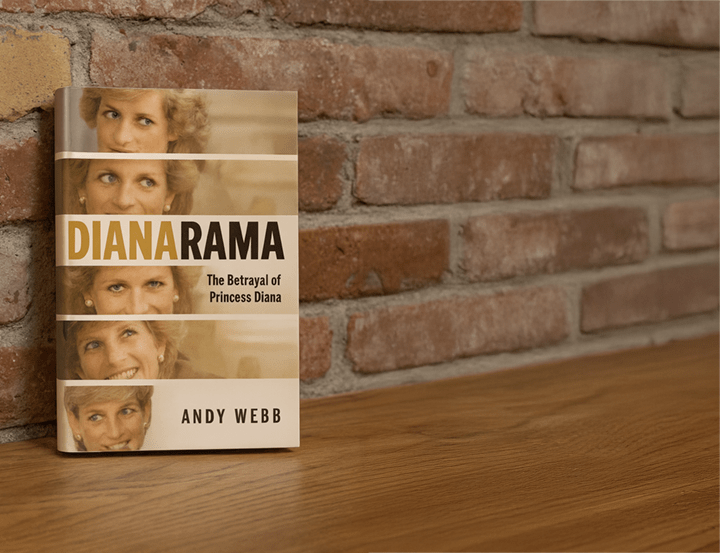
THERE are moments when an institution’s mask slips so completely that it can never truly be put back on. Former BBC journalist Andy Webb’s scorching book Dianarama, published last week, is such a moment for the BBC.

On top of the unfolding and escalating scandal about the Prescott dossier, which concludes that the BBC Board (and its predecessors, the Trustees and the Governors) were and are incapable and arguably unwilling to properly police accuracy, impartiality and good enough practice, Webb’s forensic reconstruction of the Martin Bashir scandal not only exposes his original deceit in 1995, but shatters the manufactured history the BBC has spent nearly 30 years carefully layering over it.

Now — true to form — it emerged this week that the BBC is already trying to rewrite the rewrite. The Corporation’s latest coverage of Webb’s book, posted in predictably defensive tones on its own website, would have you believe this is a story long resolved, its shame confessed, its wounds healed.

‘Lord Dyson established what happened,’ it insists, as if the BBC had been dragged kicking and screaming into truth-telling and is now eager to move on, chastened and cleansed. But this is merely the BBC’s latest falsehood in a saga of cover-up and deception going back to 1995. The crucial truth the BBC avoids mentioning — indeed, arguably the truth it relies on the public forgetting — is that Lord Dyson was never allowed to investigate the full scandal. The BBC engineered a narrow, tightly fenced brief that narrowly focused almost solely on then director of news Tony Hall’s botched internal investigation of 1996.

Dyson was barred from examining the BBC’s conduct in 1995, when the forged bank statements were deployed. He was barred from examining the BBC’s long-term behaviour between 1996 and 2020. He was barred from scrutinising destroyed records, vanished memos, suspicious archive gaps, and two decades of misleading press statements. The Corporation hired Dyson to examine a single chapter and now pretends he otherwise delivered a clean bill of health.

Webb, unrestrained by BBC lawyers or corporate boundaries, has produced the account Dyson could never have written. It is the missing autopsy report, the one the BBC hoped would never exist.

And what Dianarama reveals is devastating. Far from a lone reporter’s deception, the Bashir affair emerges as a multi-layered, multi-year conspiracy of silence. Forged bank statements which outrageously suggested that Diana could not trust the key figures in her household were merely the spark.

The real conflagration was the institutional response, one that involved BBC editors who doubted Bashir’s story but waved it through, multiple senior executives who saw red flags but closed their eyes and have never been held to account, an internal investigation designed not to uncover the truth but to bury it, and a senior leadership, including four director generals, who knowingly misled the public for 30 years.

Perhaps the most disturbing revelation is that the BBC’s cover-up did not age, weaken, or fray over time. It calcified. It broadened. It became part of the BBC’s DNA in how it handled complaints.

Files quietly disappeared. BBC lawyers stonewalled Freedom of Information requests. Press officers recycled denials they knew were untrue. Successive DGs inherited the lie and decided, consciously or not, to maintain it. The BBC did not merely fail Diana. It failed the British public, over and again, while insisting with astonishing arrogance that it is the guardian of national truth and journalistic integrity.

And now, as Webb forensically sets out the fuller, darker story the BBC suppressed, the Corporation has responded in the same way it always does: by belittling, minimising and reframing.

Its latest website piece seeks to cast Webb’s findings as curious ‘background’, interesting ‘detail’ and helpful ‘context’ to the supposedly authoritative Dyson report. This is not transparency. This is cynical, deceptive crisis management — the BBC’s attempt to contain Webb’s revelations before they infect the wider debate about its failed culture, its collapsed leadership, and its dangerous power.

This behaviour is not a relic of the 1990s. It is the BBC’s operating model today. The same culture that lied to Diana caused Panorama to broadcast a doctored Trump speech — and then hid that fact for six months.

The same managerial instincts that closed ranks around Bashir have also dictated the Corporation’s distorted Gaza coverage, its climate alarmism orthodoxy, its systematic smearing of mainstream opinion as ‘far-right’, and its treatment of legitimate public complaints as irritants to be neutralised.

The same BBC that deceived a vulnerable princess continues to deceive the nation under the comforting slogan of ‘impartiality’.

The Corporation claimed at the Department of Culture, Media and Sport select committee on Monday (called to look at the Prescott dossier) that its internal scrutiny processes would be reformed and that the Corporation was ready to introduce better accountability.

The truth is that an institution which still cannot tell the truth about its greatest scandal is not reformed; it is unreformable from within. BBC chairman Samir Shah’s testimony to the committee was yet more window-dressing and mealy-mouthed assurances. Committee chairman Carol Dinenage was right to claim on the Today programme on Tuesday that the BBC is not in safe hands.

Andy Webb has done what the BBC paid Lord Dyson not to do: he has shown the extent of the internal rot and lack of accountability. He has revealed the breadth of the complicity, the longevity of the cover-up, and the continued dishonesty of the Corporation’s public narrative. He has proved that the BBC is incapable of policing itself, incapable of honest self-reflection, and incapable of telling the truth when the truth threatens its power.

The Bashir affair did not end in 1996. It did not end in 2021 with the Dyson report. It will not end until Parliament ends the system that allowed it to happen: a broadcaster funded by compulsion, protected by statute, and permitted to investigate itself.

Diana deserved the truth. Britain deserves the truth. Andy Webb has now shown, beyond any reasonable doubt, that the BBC will never give it unless it is forced to.

BBC judges itself over climate change bias. Guess the verdict!

BBC judges itself over climate change bias. Guess the verdict!

A RULING by the BBC Editorial Complaints Unit (ECU) about numerous aspects of BBC climate change coverage in response to a complaint submitted by News-watch confirms with chilling detachment and arrogance that the Corporation is locked in biased denialism of the worst, dogmatic kind.

They have determined that because the United Nations, governments round the world and their agencies such as the Met Office and Nasa in the US, along with NGOs, believe in the snake oil of climate alarmism, the BBC will only ever cover the topic through that lens.

As part of last week’s curt one-page dismissal of the complaint, ECU Head Fraser Steel, speaking on behalf of Director General Tim Davie, even ruled that the BBC’s brand of climate change alarmism and support for Net Zero was ‘not a matter of political controversy in the UK’.

Tell that to oilrig employees in the North Sea who fear for their jobs because of Ed Miliband’s eco-fascism. Or pensioners who will freeze to death this winter because of rocketing fuel bills triggered by cruel renewables policies.

Readers of TCW Defending Freedom and News-watch are well aware of the BBC’s outrageous bias in this domain through the work of Paul Homewood and others, as well as blogs over many years from News-watch itself, but this latest reply represents a new level of stonewall totalitarianism.

The comprehensive News-watch complaint was originally submitted to Ofcom in October last year on the ground that the BBC’s climate change was so biased that it was a matter of major national importance. Ofcom, in its usual sloth-like handling of complaints from people and organisations it does not like, decided in February that it was not of urgent national importance and said it could be handled by the BBC.

Accordingly, News-watch then wrote to Tim Davie re-submitting the original Ofcom complaint. He regarded it of such minor importance that he left it to the complaints unit to reply. The first part of the usual BBC stonewalling can be read here. In a nutshell, it said that because everyone in power the BBC slavishly follows – from the UN downwards – believes in climate change alarmism, it must be true.

There is no appeal against this BBC decision, and so News-watch is now appealing to Ofcom to review the ECU decision. Rejection is almost inevitable because in almost six years of being the appeals body Ofcom has ruled against the BBC in only a tiny handful of cases. Until the BBC is no longer its own judge and jury in the handling of impartiality complaints and these are instead handled independently, the saga underlines yet again that the BBC is impervious to criticism and has free rein in pursuing its own political agendas in the left-wing/woke arena.

News-watch is campaigning relentlessly to ensure that the new BBC Charter makes the Corporation genuinely independently accountable, or loses its licence fee funding. What are the chances of change under Labour as the new Charter negotiations begin imminently? The work must go on.


Ten years on, BBC bias is worse than ever

Ten years on, BBC bias is worse than ever

ASTONISHINGLY, it is almost ten years since I first wrote my first blog for The Conservative Woman website. By that time, I had been friends with and worked with Kathy Gyngell – whose brainchild it was – for almost 30 years, 14 of them in trying to hold the BBC in check over its outrageously pro-EU coverage, through News-watch.

The springboard to that blog a decade ago? The BBC’s incestuous, self-serving infatuation with Glastonbury. I noted that the Corporation was sending its usual hundreds-strong army to mount disproportionately lavish coverage of the event.

And why? I argued that in the BBC’s warped events diary, this was a ‘woke’ happening par excellence – because at its heart was support for a galaxy of right-on causes such as climate alarmism, led that year by Greenpeace.

My observations about the BBC – underpinned by News-watch research – soon became a feature of TCW’s regular Beebwatch column, and subjects in the first couple of years included the Corporation’s spiteful participation in the baseless claims against Cliff Richard, the build-up to the Brexit referendum, and then in its aftermath, persecution and denigration of Nigel Farage, and the concerted effort to undermine and reverse the ‘yes’ vote.

With hindsight, these were the years in which BBC bias towards ‘woke’ issues became so deeply entrenched that keeping track of the torrent of misinformation became truly impossible to track. Today, virtually every syllable of output is distorted. Weather bulletins are propaganda exercises in which statistics are bent at every opportunity to exaggerate alarmism. Drama is often comically crude but malicious neo-Marxist agitprop. Any coverage of history is about how vile Britain’s contribution to the world has been. Education coverage is about making the young into warriors for woke causes.

A decade on has anything changed at the BBC, and is it likely to any time soon? Sadly, no. In late January, Lucy Frazer, the useless Tories’ Culture Secretary, very belatedly released the BBC’s Mid-Term Review (MTR). 

It was announced by her predecessor Nadine Dorries two years earlier. The exercise was trumpeted as a genuine attempt to attack BBC bias and early indications were that there was genuine intent. News-watch was invited to contribute to the process and did so here and here.

We argued in our submission that the only hope of making the BBC properly impartial and in tune with the audiences it is supposed to serve is if the complaints system – in which the Corporation is its own judge and jury – is swept away and replaced by a robustly independent replacement process with teeth.

As recently as late last summer, sources at the highest levels within the Culture Department were still saying that such reforms were under active consideration. But it was not to be. The MTR has turned out to be – like every alleged BBC reform before it – worse than useless. The blunt truth is that the BBC remains in charge of complaints handling. It is the fox with the keys to the hen house. In the entire Charter period (since 2017), only 147 complaints of almost two million received have been upheld by the BBC’s Editorial Complaints Unit.

The MTR supposedly beefed up the complaints process by suggesting that Ofcom should become more rigorous about BBC bias. The reality is that since 2017 Ofcom has seen fit to investigate only a handful of BBC complaints. Most of its Content Board have strong BBC connections and instead focus their energies on attacking GB News.

Thus, nothing is happening to halt the ‘progressive’ agenda embraced by everyone at the BBC from the Director General downwards.  All anyone can now do to resist BBC bias is to stop watching.