
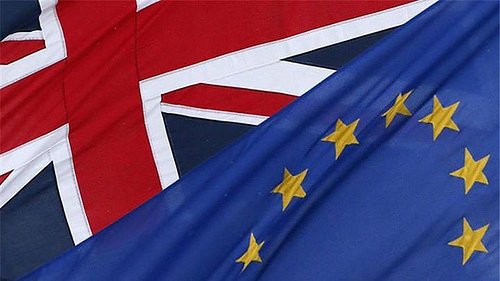
FOR the first time in News-watch’s 27 years of monitoring the BBC, the Corporation has partially upheld a complaint about EU-Brexit coverage. ‘Partially’ is crucial in showing the contortionist nature of its accountability.
The BBC’s Executive Complaints Unit (ECU) accepted that flagship Radio 4 Today programme breached impartiality by presenting the case for closer alignment with the European Union without acknowledging the opposing argument for making fuller use of the freedoms provided by Brexit. But Fraser Steel, head of the ECU, rejected the greater part of the complaint by endorsing the gross bias underlying the programme.
When the Daily Telegraph reported the ruling on Friday and exposed that contradiction, the BBC did not address it. Instead, in its right of reply, it reverted to the stonewalling it usually adopts when addressing complaints. It defended Steel and dismissed criticism of his reasoning. Move along, folks, nothing to see.
The News-watch complaint was based on the Today programme’s handling of Governor of the Bank of England Andrew Bailey’s Mansion House Speech on November 15, 2024. He argued that Brexit was one of the main reasons the British economy was not performing as well as it could or should.
News-watch argued that the sequence constructed was totally biased in favour of Bailey’s anti-Brexit stance.
Katya Adler, the BBC’s Europe editor, reported that Bailey was ‘not alone in pointing the finger at Brexit’. She interviewed two contributors who broadly supported his analysis.
The first was Sir John Gieve, a former deputy governor of the Bank of England. He cited estimates suggesting Brexit would reduce GDP by between 4 and 6 per cent and described this as the consensus among experts. Yet he also conceded that measuring Brexit’s economic effects was ‘extremely difficult’ and that economic models were poor at measuring major shocks.
That should have prompted rigorous questioning. Britain’s economy had also been affected by covid, the war in Ukraine, energy prices, inflation, interest rates and domestic policy. Estimates of Brexit’s impact depend heavily upon counterfactual models comparing the real economy with a hypothetical Britain which remained in the EU.
Adler, however, did not explore further those uncertainties Instead, the discussion moved towards closer relations with Brussels.
The second contributor was Liam Byrne, Labour MP and chairman of the Commons Business and Trade Committee. He advocated reducing trading friction, aligning agrifood standards, considering a youth mobility agreement and developing closer economic relations with the EU.
In sum, Bailey supplied the diagnosis that Brexit had damaged Britain, Gieve reinforced it with economic estimates, and Byrne proposed remedies based on closer EU alignment.
The programme did not include a contributor who articulated the alternative case. No one argued that Britain might improve its prospects through regulatory freedom, independent trade policy or fuller use of powers returned from Brussels. Nor did the programme test whether poor post-Brexit government decisions should be treated as proof that Brexit itself had failed.
News-watch’s complaint, submitted in December 2024 and elevated to the ECU in March 2025, was not a crude demand for equal numbers of leave and remain supporters. It challenged the entire editorial construction: the premise, the guests, the questioning and the range of policy options listeners were allowed to hear.
The BBC took an astonishing 18 months to resolve it, issuing Steel’s final ruling on June 4.
Steel rejected several central elements. He said Adler had merely summarised Bailey’s speech, and that the shared outlook of the two guests was not itself a breach. Most importantly, he found no failure of impartiality in their ‘shared assumption’ that Bailey’s diagnosis was broadly correct. He said this reflected the predominant view among economists and that he had found no significant body of opinion suggesting Brexit’s effects had been positive or neutral.
That was the basis on which most of the complaint was rejected.
Steel nevertheless ruled that the programme did breach impartiality when discussing the remedy. It had assumed that the answer lay in closer EU alignment without acknowledging the alternative argument that Britain could improve its performance by exploiting opportunities outside the EU and its regulatory system.
He concluded that the competing arguments were so clearly controversial that the item should at least have acknowledged the alternative case. The complaint was therefore partially upheld, and Steel apologised on behalf of the BBC.
This was a significant concession: the ECU accepted that a flagship BBC programme had discussed a central question about Britain’s economic future from only one side.
But Steel separated the diagnosis from the remedy. He accepted that the remedy required an alternative perspective while ruling that the diagnosis of Brexit damage did not.
That distinction is hard to sustain. The programme began with the proposition that Brexit was a major cause of weak performance, reinforced it with two sympathetic contributors, and moved to closer alignment. Once Bailey’s analysis was treated as settled, the direction was predetermined.
Steel’s invocation of an economic consensus did not answer this objection. If anything, it reinforced it. A predominant view is entitled to coverage, but it does not turn model-based estimates into directly observable fact or remove the BBC’s duty to test consequential claims.
Nor does it prove that there is no serious argument about the scale and causes of the effects, the policies adopted since Brexit or the opportunities leaving the EU created. Gieve’s own warning that measurement was extremely difficult should have made the BBC more cautious, not less.
The Daily Telegraph rightly focused on this reasoning. News-watch was quoted as saying the complaints process had ‘bent over backwards’ to explain away the rest of the imbalance.
The BBC’s answer as reported in the Telegraph piece was revealing. A press office spokesman declared: ‘The BBC has no view on the economic impact of Brexit, and nothing in this finding suggests otherwise.’ But the spokesman immediately defended Steel by citing ‘the consensus among economists’ as a reason for rejecting that part of the complaint. The contradiction is obvious. The BBC said it has no view, yet relied upon one economic assessment to decide that Bailey’s diagnosis required no substantive challenge.
That is not neutrality. It is the treatment of one disputed view as the neutral baseline.
The BBC also defended Steel’s experience and the independence of the ECU. This was irrelevant. The criticism was not that Steel lacked experience or had been instructed what to conclude. It was that his reasoning was inconsistent and rested on assumptions which were themselves under challenge. Instead of confronting that criticism, the BBC invoked the credentials of its official and the status of its process. That is a text-book example of how an institutional confirmation-bias bubble protects itself. On Brexit, the negative interpretation is repeatedly treated as expert analysis, while the alternative is treated as political advocacy requiring special justification. The same culture then adjudicates complaints about the resulting output.
News-watch has spent 27 years documenting this process through about 70 detailed reports. The BBC has never properly engaged with that systemic evidence. Its complaints arrangements confine challenges to individual programmes or narrowly linked sequences, excluding evidence of recurring patterns across hundreds of broadcasts. In effect, the system inspects individual bricks while refusing to look at the wall.
That makes this partial upholding a painful climbdown for the Corporation. Is that why it took 18 months for the ECU to arrive at this ruling? The BBC has finally accepted with all the grace of a sulky child that a Brexit item was biased because it airbrushed out of the equation pro-Brexit opinion.
The ruling also exposes the deeper problem. Steel accepted the omission at the point of remedy while endorsing the assumption which drove the item from its opening sentence. When challenged, the BBC defended Steel and repeated the very consensus argument under dispute.
The BBC has finally partially admitted to News-watch Brexit bias. That is a landmark. Its reaction shows why it took 27 years to arrive there.