Author Archives

David Keighley

News-watch submission to the BBC’s EU Consultation on EU Referendum Editorial Guidelines 15.1.2016

News-watch submission to the BBC’s EU Consultation on EU Referendum Editorial Guidelines 15.1.2016

The BBC Trust recently embarked on an eight-week consultation on draft Editorial Guidelines for its coverage of the EU in/out referendum.  This is News-watch’s submission.  The proposed guidelines are here.


Preamble

News-watch has been monitoring the BBC’s EU-related output for 16 years. Detailed research based on systematic analysis of relevant BBC programming using established academic principles has shown that the Charter requirements on impartiality have been serially breached. Most importantly, the case for withdrawal has been seriously under-reported, and those advocating Brexit have been pervasively cast as xenophobic, disorganised extremists from the ‘right’ or ‘far-right’.[1] The archive of News-watch reports and elements of engagement with the BBC can be found at www.news-watch.co.uk. Over the entire period, the BBC Trustees have undertaken to examine the News-watch findings only twice. On each occasion, the Trustees adopted a highly biased approach to the research and clear evidence of breaches of impartiality were rejected on spurious grounds that suited the BBC but flouted rules of fair inquiry.[2]

This submission is an attempt to persuade the Trustees to adopt in the proposed Editorial Guidelines a much more rigorous and demonstrably independent approach to ensuring impartiality during the referendum campaign.

The BBC Trustees and those tasked with investigating impartiality on their behalf have sought to cast monitoring as ‘unhelpful’ and based on ‘metrics’, and implied that such investigations concentrate solely on counting speaker appearances and calculating airtime allocation.[3] This is a wilful misrepresentation of News-watch’s approach, which investigates impartiality using a range of analytical tools, both quantitative and qualitative, and has never focused on statistical data in isolation. The News-watch corpus of work provides abundant evidence that illustrates that the Trustees, by contrast, do not have in place adequate processes for properly ensuring that Charter requirements are met.[4]

And indeed, the draft Referendum Guidelines reduce impartiality to achieving ‘broad balance’ – a simple metric focusing on headcounts – and ignore the vital consideration of how guest speakers are actually treated, including interview tone, question content, the number of interruptions, the positioning of speakers within individual reports, within programmes or within the overall schedule. Also, who is chosen for each side, and how well informed and articulate are they. Impartiality rests on a multitude of complex, interlocking factors, and News-watch is concerned that the measures outlined in the draft Referendum Guidelines for monitoring content will be ineffective in ensuring a fair hearing for both sides.

Observations

This EU referendum will result in a decision of immense constitutional importance. The proposed Guidelines document is too vague to deliver demonstrable impartiality. It leaves too much to the BBC’s own ‘editorial judgment’ applied in the loose and imprecise framework of ‘due’ impartiality. It has been written from the inside to accord with and defend the BBC’s own operational practices rather than as a rigorous framework to ensure genuinely independent regulation of content.

A major over-arching concern is whether the Trustees – who are the final arbiters of impartiality – are themselves sufficiently independent. Of course members of the Trust are appointed by DCMS and a condition is impartiality. But special considerations apply here. Only two of the five members of the Trust Editorial Standards Committee, Richard Ayre, and Mark Damazer, have extensive experience of working in a national newsroom. Yet both spent the majority of their careers at the BBC and have been and are major champions of the Corporation. They may claim to be ‘independent’ but this is not credible, and yet they will inevitably play a crucial role in determining issues of impartiality that arise during the campaign. We spend several years trying to persuade Mark Damazer to take a less Europhile approach, without success. Also, as far as we can see several of the Trustees are firmly in the ‘man-made climate change’ camp, an issue clearly linked to the EU, and we see no counterbalancing members. The Guidelines, in the exceptional circumstances of this referendum, should provide detail of how genuine independence of outlook will pertain to key judgments.

There is nothing in the Guidelines about transparency of process. Whilst obviously elements of the BBC’s decision-making are confidential for good operational reasons, public confidence in the editorial processes would be boosted if there was a greater degree of openness in how key judgments are going to be made through the referendum campaign. The output can only formally be challenged through the complaints procedure. It is a fact that since the Trustees first became the BBC’s regulatory body, they have not upheld through the ESC a single complaint about EU coverage.[5] The BBC is judge and jury in terms of its own editorial balance. Against that background, measures should be included in which decision-making is open to retrospective scrutiny and which demonstrate that legitimate outside concerns about balance will be taken into account.

The key provisions contained in section 3.1 of the draft document are too vague to provide a reliable framework to ensure impartiality. The BBC should be aiming in this historic constitutional debate to achieve genuine impartiality (not just ‘due’) between the ‘yes’ and ‘no’ camps. News-watch has provided extensive evidence to the Commons European Scrutiny Committee that the ‘due’ word has been the justification for major imbalances within EU coverage.[6] As things stand, nothing in the Guidelines will redress this. A further problem is that the requirement for impartiality is framed in relation only to a ‘broad balance’ and the need for the inclusion of a ‘range of voices’. This gives editors enormous leeway in exercising their judgment and makes outside challenge almost impossible. The ‘broad balance’ principle is further extended because it is stipulated in the Guidelines that it can potentially be achieved across strands or channels. This could lead, for example, to the 8.10 Today interview being ‘balanced’ by something much lower down in the running order. This is clearly wrong.

A major issue relating to EU-related coverage that is not spelled out in the Guidelines at all is the need for exact terminology. In one particular area this is absolutely crucial. The News-watch archive demonstrates that in BBC programming, the term ‘European Union’ has very frequently wrongly been used interchangeably with ‘Europe’. The inaccuracy has even extended to the Trustees’ own annual poll about whether the BBC informs audiences about ‘Europe’. Of course this looseness reflects to an extent colloquial usage. But in the referendum campaign terminological precision will be vital. Those against the EU, for example, are frequently cast as xenophobes who are against ‘Europe’. Such lines of attack will need to be rigorously challenged, but there is no requirement in the Guidelines that there must be heightened, constant vigilance to prevent breaches of impartiality in this way.

The BBC has ruled out in evidence to the European Scrutiny Committee the inclusion of monitoring as a means of assessment during the referendum campaign. This is confirmed in the Guidelines in that they make no mention of any monitoring processes other than through internal editorial judgment. That is a gaping hole in the assessment process. Without rigorous, structured monitoring based on academic principles, impartiality cannot demonstrably be achieved. For example, how can the editor of a daily programme, who is charged under the Guidelines with achieving such balance over the course of the week, keep track? With the Today programme (for example), that means running analysis of dozens of items. Who is going to do this work? Will it be a separate responsibility for the duration of the campaign with personnel allocated accordingly? 3.1 rules out ‘stopwatch’ and ‘mathematical’ measurements but what other ways of assessing impartiality between two sides are there? It is not spelled out.

A major unanswered question is how the trap of covering the campaign through the Westminster bubble will be avoided. Polls show that public opinion is heavily anti-EU in its apparent support for mass immigration. How are such views (for example) going to be taken into account? On the other hand, the leadership of the Conservative, Labour and Liberal Democrat parties are all likely to be in the ‘stay in’ camp, and possibly the majority of MPs (most Labour plus all SNP, all Liberal Democrats, and half of the Conservative PLP). How will this lack of accord between public opinion and their Parliamentary representatives be reflected and dealt with? And how will UKIP be handled in that it is the majority party in the UK contingent at the European Parliament, but has only one MP, and three peers who support the party, and yet commanded 4m votes at the general election. These are just a sample of the issues involved.

The Guidelines stipulates that ‘broad balance’ requirements will not apply to some coverage, for example if there is ‘an internal disagreement over tactics’. It makes the Chief Political Adviser the arbiter of suspension of ‘normal rules’. Analysis by News-watch has shown that such coverage of rows within UKIP, and especially with regard to its immigration-related policies, has led to substantial disproportionate coverage. If this happens during the referendum campaign, it could have a significant damaging effect on the ‘no’ campaign. The Guidelines actively give license for this coverage to continue, and decisions in this arena will be entirely at the BBC’s discretion, and not subject to monitoring.

The BBC accepts that its journalists are not currently informed enough about the EU to ensure impartiality during the referendum campaign. News Director James Harding has announced that compulsory training courses to remedy this are being planned. Mention of this training is not included in the Guidelines, however. Will members of staff who have not undertaken the training be allowed to work in frontline programming covering complex and sensitive areas of the referendum campaign?   Can we see this training programme, to comment on its objectivity – the BBC’s last training programme addressed none of the fundamental EU issues.

Related to this, the Lord Wilson of Dinton report on the BBC’s EU coverage specifically spelled out that special measures should be taken during a referendum campaign to inform audiences better about issues relating to the EU. There is no mention in the Guidelines of such special programming in the news arena or of any measures to ensure that it is properly impartial. This month (January 2016), a Radio 4 programme about Brexit, projected the process as something of unprecedented difficulty. This – in the context of a vote that could be less than six months away – showed strong bias against the case for withdrawal. The Guidelines should contain provisions that prevent this.

[1] https://news-watch.co.uk/wp-content/uploads/2015/03/News-Watch-European-Election-2014-Full-Survey.pdf

[2] https://news-watch.co.uk/wp-content/uploads/2015/10/Independent-Editorial-Advisers-Report-on-Lord-Pearsons-Appeal-to-the-ESC.pdf and https://news-watch.co.uk/wp-content/uploads/2015/03/2.-Editorial-Standards-Committee-decision-on-Newsnight-Complaint-17-November-2013.pdf

[3] http://data.parliament.uk/writtenevidence/committeeevidence.svc/evidencedocument/european-scrutiny-committee/eu-scrutiny-follow-up/oral/23350.html

[4] https://news-watch.co.uk/wp-content/uploads/2016/01/News-watch-submission-to-the-European-Scrutiny-Committee.pdf

[5] European Scrutiny Committee, Oral evidence: Scrutiny inquiry: follow up, HC 918, Wednesday 14 January 2015, p5

[6] https://news-watch.co.uk/wp-content/uploads/2016/01/News-watch-submission-to-the-European-Scrutiny-Committee.pdf

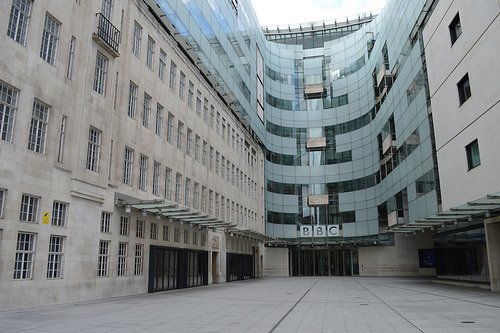
Photo by quinn.anya

BBC Brexit programme shows strong pro-EU bias
BBC Brexit programme shows strong pro-EU bias

With the campaigns to secure exit the EU now launched, the BBC knows its EU coverage is under unprecedented scrutiny.

Before Christmas, Rona Fairhead, the BBC Trust chairman, appeared before the Commons European Scrutiny Committee and swore blind that systems were in place to ensure impartiality in the run-up to the EU referendum.

And – pigs maybe do fly! – the Corporation has now boldly gone into unknown territory, and finally made a programme about what exit for the UK might entail. How to Make a Brexit, compiled and presented by veteran political reporter Carolyn Quinn, was first broadcast on Radio 4 on Tuesday and is repeated this Sunday.

News-watch has been monitoring BBC output for 16 years and this is the first dedicated programme on this subject that has crossed our radar.

So how was it? The transcript is here and the programme can be heard on Youtube. But don’t hold your breath. The reality is that from beginning to end it was a travesty that showed only that those who work for the Corporation are so pro-EU that they don’t even begin to comprehend the depths of their bias.

Evidence for that is so thick on the ground that it’s almost impossible to know where to start, but a favourite moment was when, close to the beginning, Quinn used an extract from a pro-EU rant on the Now Show to illustrate one of her key points. The tone was thus set.

Quinn’s linking commentary and choice of quotes was framed with only one aim in mind – to tell us how desperately complex a departure would be. The first quote in this vein from a contributor was:

“This is the largest scale legislation and policy exercise that has possibly been carried out ever”.

Ms Quinn then added: “…as we’ll discover there would be all sorts of things that would need to be finally negotiated. The trade options alone are staggering and then there’s what to do with EU legislation, citizenship, even devolution.”

Thereafter, almost every element of the programme fitted with the pro-EU propaganda the BBC has been broadcasting for years. It left no room for doubt: leaving the EU is something that only a fool would contemplate.

The most serious and obvious bias was in the treatment of contributors.

The pro-EU speakers who wanted to make exit sound impossibly complex were Charles Grant of the Centre of European Reform – a perennial BBC favourite – and Jean-Claude Piris, a former director of EU legal services. Both EU cronies were afforded clear space to make their respective arguments and were edited to make them sound coherent and persuasive. Their contributions amounted to more than 800 words, and their stance was made crystal clear.

By contrast, ‘eurosceptic’ contributions, for example from Ruth Lea, the political economist from Business for Britain, and UKIP MEP Diane James, were fragmented and edited in such a way that if they provided Quinn with any clear arguments in favour of exit, they were not obvious to the listener. Negotiating separate trade deals was made to sound impossibly complex.

A word count of contributors shows that the clearly pro-EU side, essentially from three main contributors amounted to more than 1200 words and those from the Brexit and clearly Eurosceptic sides added up to 800 words – spread across eight speakers. Of these, only Ruth Lea had more than 100 words.

Of course, bias is not solely about numbers but here there was a clear weighting towards the EU perspective and this was compounded by Quinn, whose main editorial intent both in her own contributions and her editing of comments was to illustrate her central contention that this whole prospect was a fool’s errand.

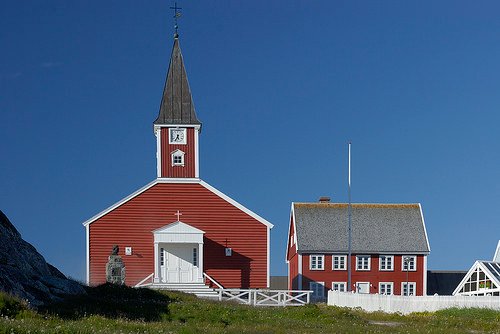
Other problems? There are legion. Why the choice of Greenland as the peg for the programme? Its experience (a territory with a population of only 57,000) was so long ago as to be almost irrelevant because the rules are now entirely different.

Quinn kept in the programme without challenge – and indeed emphasised them – views from Jean-Claude Piris that suggested that pressing the exit button would mean that British citizens in EU countries would face severe difficulties because their status would change. Others, such as EU expert Richard North, strongly disagree.

Much more than that, however, was the whole tone of the programme. Everything about it emphasised that an EU exit would be problematical. There was no attempt to look at benefits – the Greenland experience of enjoying integrity of its fishing waters was almost totally glossed over.

Of course a programme featuring such a perspective that is chock-full of genuine supporters of withdrawal allowed to put their case might be somewhere in the BBC pipeline. But don’t count on it. Those campaigning for a Brexit have a mountain to climb in countering such blatant propaganda.

Photo by Greenland Travel

BBC lays down the law on climate alarm coverage
BBC lays down the law on climate alarm coverage

Outrageous. That is the only way to describe respectably the latest impartiality ruling by the BBC Trust.

This band of climate change crusaders – led by the Trust’s Richard Ayre, chair of the Editorial  Standards Committee (ESC) – have ruled that a show that was a light-hearted dig at climate fanaticism by the Daily Mail’s Quentin Letts on Radio 4 back in August amounted ‘a serious breach of editorial guidelines’.

The crime? According to Ayre’s ruling – himself a former chairman of a group that campaigns on climate change – the producers failed to allow the Met Office totally to spoil the programme by being assigned acres of space to tell listeners that Letts was talking a load of rubbish because it was not in accord with the prevailing science.

Letts’ programme was in the humorous series What’s the Point of?…Specific criticisms levelled at it by the ESC also included that it had dared to suggest that the Met Office – which for years has been stuffed full of climate change zealots – was (shock horror), involved in political lobbying (over its own views), that it was not impartial about climate issues, and that it was alarmist (in the way it was trying to terrify us all into believing that the world would end soon because of our wicked capitalist ways).

For starters, the ruling is an affront to science and to basic intelligence because science does not and has never worked on the basis of ‘prevailing views’. Scientific theories aren’t reached by voting.

It proceeds by continually testing theories; the essence is that at any moment a whole edifice of accepted belief might come crashing down. There are thousands of scientists who do not agree with the Met Office’s and the BBC’s alarmism, as, for example, Jo Nova’s site regularly shows. They assert that the idea that the science relating to meteorology is settled is utter nonsense. And they point out that the UN’s process of inquiry into the science is totally flawed and designed for political purposes rather than reaching the truth.

But beyond that, the ruling also demonstrates that the BBC has descended into operating like the thought police in its attitudes towards almost every sphere of national life and culture. It has adopted a self-serving definition of ‘due impartiality’ to assess editorial balance.

Such judgments about who and who should not be heard now operate in coverage not solely related to related to climate, but also covering the environment, immigration, multiculturalism, religion, sexuality, Islam, the EU, the state-sanctioned killing of those who wish to die, family life, the British Empire, slavery, British history, morals, and much, much more.

Universities have rightly been condemned for operating the ‘no platform’ policy with increasing zealotry and bigotry. The ruling against the Letts programme confirms loudly and clearly that the BBC now has its own version of this. Those it disagrees with are banned from the airwaves completely, simply ignored, or, on the rare occasions where they are not, forced to offer their views in such a suffocating framework that they are effectively neutered.

Investigations have shown that the Trustees’ entire process of upholding impartiality is rotten to the core, and for years has been operating only to protect the BBC from criticism. This latest ruling confirms yet again that the Corporation’s governance is not fit for purpose.

Rona Fairhead, the Trust chairman, made yet another BBC-serving speech last week in which she argued that any changes to the BBC being made in connection with the charter renewal should be evolutionary rather than revolutionary. Let us hope that Culture Secretary John Whittingdale totally ignores her simpering pleas.

Quentin Letts’ response to the BBC’s ruling can be read here: http://www.dailymail.co.uk/news/article-3355441/QUENTIN-LETTS-vaporised-BBC-s-Green-Gestapo.html

The full transcript of his programme can be read here: http://biasedbbc.org/blog/2015/12/11/whats-the-point-of-the-met-office-transcript/


Photo by allenthepostman

Are BBC procedures for measuring impartiality fit for purpose?

Are BBC procedures for measuring impartiality fit for purpose?

David Cameron is gearing up this week for another attempt at telling us that leaving the EU will be disastrous for the UK and to outline more of his ‘renegotiations’.

Meanwhile, under far less media scrutiny, the House of Lords has been debating much more crucial work: whether special steps should be taken to ensure that the BBC is impartial in its coverage of the EU referendum.

Here, there was a bit of a surprise. Baroness Anelay, the government spokeswoman, responding to the calls for tough new measures, was unexpectedly tough on the BBC.

She acknowledged that the Corporation’s EU-related coverage is a major cause for concern, and also that in the past there had been justification for worries about the BBC’s impartiality.

She added that on that basis Culture Secretary John Whittingdale had written to the BBC in June, and revealed that he had now received a reply outlining the BBC’s approach to coverage which promised tough vigilance.

But don’t hold your breath. Baroness Anelay did not reveal to their noble lords what the steps were, but it’s likely that they are on similar lines to the approach outlined by News Director James Harding when he appeared before the European Scrutiny Committee last month, as was reported on this site in a guest post by Craig Byers.

Basically, Harding risibly said that talking to audience councils, having a referendum hotline for campaigning groups, and a programme of half-day seminars for BBC journalists will do the trick. At the same time, he set his face against any kind of independent academic monitoring of BBC content. He and David Jordan, the Director of Editorial Standards, claimed that such methodology was ‘unhelpful’, expensive, confusing, and too much based on number-crunching for their liking.

How could something as sacred as BBC journalism be subjected to such unrefined analysis was their indignant tone.

Harding also went so far as to claim that the conducting of such research threatened editorial freedom and to hem editors in. He did not outline why. Did he mean that if editors knew that they were being watched, they would not be able to perform their duties?

If so, that’s astonishing. The whole point of the public service journalism broadcast and published by the BBC is that it is continually subject to scrutiny in terms of fairness and balance. If editors feel constricted by that, they should be doing something else.

Harding’s and Jordan’s snooty claims about monitoring, however, are, on further investigation, frankly bizarre – because they are sharply at odds with existing BBC practice.

Why? Well, for years, the BBC Trustees, and before them, the BBC Governors have been holding what they call ‘Impartiality Reviews’.

That’s actually a total misnomer, because the reality is that most – like the 2011 review of Science coverage, or the 2012 Prebble Report into the EU, or the 2014 equivalent into rural affairs – are actually conducted by BBC lackeys who confirm what the Trustees want to hear: that almost everything in the garden is rosy.

Putting that aside, however, considerable effort is made to making these exercises look genuine. It is here that where academic monitoring of output comes in. And in at least nine of the Reviews since 2004, such surveys, conducted usually by university media departments, have been an integral component of the review process.

Moving up to the present, a Trust review into the use of statistics in news coverage is currently underway, and in that connection, content analysis from Cardiff University has been commissioned.

The various surveys have been clearly used by the Trustees to convey to the outside world that the Reviews are conducted on an impartial and independent basis, and then to bolster the claims of overall impartiality. For example, in the most recently published Review, into rural affairs, the BBC Trust, after the official panel report had been received, declared:

Overall, the BBC’s coverage of rural areas in the UK is duly impartial. There is no evidence of party political bias, and a wide range of views is aired.

Analysis of the various review documents shows this claim can only be based on the academic survey work, in this instance conducted by Loughborough University.

That is why Harding and Jordan’s remarks about monitoring can truly be described as bizarre. The Trustees, who are the ultimate guardians of BBC impartiality, use such surveys as proof of editorial balance. But the News department think and do otherwise.

In fact, investigation of the archives reveals more contradictions. A key finding in the Lord Wilson of Dinton Impartiality Review (2004) was that rigorous monitoring of output was essential to achieve impartiality. The then news management (under Helen Boaden), responded that they agreed, said that internal monitoring systems were already in place, and pledged that they would be upgraded.

Similar promises about monitoring were made after three further reviews (covering business, Israel-Palestine and the four UK nations) between 2005 and 2008.

Jordan’s response to the European Scrutiny Committee confirmed that these promises have now been jettisoned by the news executive.

This was BBC business as usual. It boils down to that Harding and the rest of the BBC arrogantly believe that the only people who can measure news impartiality are those from the BBC itself through what they call ‘editorial judgment’.

John Whittingdale may have a letter from the BBC pledging impartiality in coverage of the EU referendum.

It’s not worth the paper it is written on.


BBC apology over Quentin Letts’ climate change programme  ‘is the stifling of free speech’

BBC apology over Quentin Letts’ climate change programme ‘is the stifling of free speech’

Once in a blue moon…? Hold the front page… because the BBC complaints department has actually apologised to someone.

Not, of course, to the battalions of folk who have been saying for years that coverage of topics such as feminism, multiculturalism, the EU and immigration is beyond the pale.

The response to them – as News-watch chronicles in its submission to government review of the BBC that closed today (October 8) – is ‘brickwall negativity’, combined with a liberal dose of bone-headed obfuscation to defend the Corporation at all costs.

The document notes that, according to Complaints Unit figures, only around 6% of complaints are ever fully upheld by the Corporation – and those that are usually revolve around marginal points.

So, step forward instead to collect this rare-as-hen’s- teeth apology a certain Dr Andy Smedley. Who? Well, he pursues a career publishing obscure papers on snow, ice and (of course!) renewable energy at Manchester University. And, if his Twitter feed is to be believed, he spends most of his time telling the world that we are all going to fry.

The good doctor complained that Daily Mail columnist Quentin Letts had the temerity, in the Radio 4 series ‘What’s the Point Of…?’, to dare to criticise the forecasts of the Met Office and to include a range of contributors who – shock, horror – even mocked the Met’s inaccurate forecasts.

Those who earn an estimated $1.5 trillion from governments round the world for pursuing their scared mission of alarmism clearly don’t like their gravy train being threatened. Dr Smedley, it seems, was particularly incensed.

The Complaints Unit grovelling response to him was:

‘…we do not consider the programme met our required standards of accuracy or impartiality in its coverage of climate change science. As previously stated, we also recognise that in giving voice to climate change sceptics, it failed to make clear that they are a minority voice out of step with the scientific consensus – which we would normally expect on the occasion when we include such viewpoints.’

Then in chilling Orwellian vein, it added:

‘Since writing to you originally, we have carried out an examination of the programme’s productions processes to discover how it (sic) went wrong. We are confident that the programme came about through an unusual combination of circumstances which we have now rectified to avoid any repeated problems.’

Put another way, the BBC has decided that the science is settled and that’s it. Quentin Letts and his chums are dangerous deviants because they do not agree with the ‘the consensus’. The programme’s production team is going away on a BBC indoctrination course to be told about their extreme folly in inviting them to speak. And in future, Letts et al won’t be allowed back on unless an army of Dr Smedleys first gets the chance to say they are talking rubbish.

Those of you who have followed the BBC’s bigotry in this arena will not be surprised by the approach – a similar torrent of alarmist bile was unleashed when, after the 2013/4 Somerset floods, Lord Lawson of Blaby, the former Chancellor of the Exchequer was asked on the Today programme about the causes and possible remedies.

It illustrates graphically that the Corporation is bursting its sinews to limit free speech in an area of science that is highly complex and far from settled. The Cameron government confirmed two weeks ago that it was continuing to waste billions of pounds a year on the assumption that climate alarmism is warranted, so this is a matter of massive public concern.

One ray of sunlight is that Culture Secretary John Whittingdale told the Conservative party conference this week that, in connection with Charter renewal, the Corporation will no longer handle complaints against its output because it had not ‘always been as fair and impartial as it should’. He declared:

“I know from the many letters and conversations that I have had that you have sometimes felt that the BBC has not always been as fair or as impartial as it should….

“…what is important is that the public should have confidence that complaints are examined independently and carefully. And that it is no longer the case that if you make a complaint against the BBC, the decision on whether it is justified is taken by the BBC”.

Let us hope that in this vital area, he delivers. Handing such complaints to an outside body which is both robust and genuinely independent will put an instant check on the Corporation’s rampant bias. The News-watch submission to Whittingdale shows in graphic detail how far the rot has taken hold – and the ludicrous contortions the Corporation performs to stifle free speech.


Photo by N@ncyN@nce

News-watch calls for scrapping of ‘biased’ BBC complaints system

News-watch calls for scrapping of ‘biased’ BBC complaints system

News-watch has told culture minister John Whittingdale’s review of the BBC  that the current BBC complaints system is not fit for purpose.

The 10,000 word submission argues that it should be replaced by scrutiny through a completely independent body.

It provides comprehensive evidence – from News-watch’s own experience of submitting complaints – that the Trustees, who police BBC impartiality and have overall responsibility for complaints, are too much in the sway of BBC management and are not robustly independent.

The introduction to the submission states:

“News-watch  has unique experience over the past 16 years in dealing with the BBC about issues of impartiality relating especially to the coverage of the affairs of the European Union[1].  We have found that the current structure of BBC governance favours too much the interests of the BBC itself, is not properly independent, and, because of multiple operational inadequacies, is not fit for purpose. There is brick-wall negativity in dealing with complaints[2].

The Trustees have obdurately and unreasonably refused to accept extensive evidence that the EU-related output has continuing serious shortcomings of the type first highlighted in the Lord Wilson of Dinton report of 2005.

The findings of News-watch, based on the systematic monitoring of BBC output and analysis using rigorous academic methodology, include: under-representation and poor understanding of the eurosceptic perspective, a continual tendency to view the European Union through the prism of Conservative splits, a failure to discuss properly the case for withdrawal, and severe under-reporting of EU affairs, to the extent that it is ‘bias by omission’.”

Full report here.


[1] News-watch has been analysing BBC output on a structured basis, in accordance with academic practice of media monitoring, since 1999.

More than 6,000 hours of news and current affairs programmes have been systematically logged and analysed on a regular basis through longitudinal surveys. It is arguably the largest research project ever undertaken into BBC output.  An archive of this work is here: www.news-watch.co.uk/archive .
[2] In 2014, according to the Trustees’ complaints bulletin, only nine complaints out of 144 considered by the Editorial Standards Committee were upheld.

Photo by ell brown

BBC PLUMBS NEW DEPTHS OF CLIMATE ALARMISM IN EMMA THOMPSON ‘INTERVIEW’

BBC PLUMBS NEW DEPTHS OF CLIMATE ALARMISM IN EMMA THOMPSON ‘INTERVIEW’

An interview on Newsnight of the actress and Labour-supporter Emma Thompson has taken the BBC’s handling of climate alarmism to new depths of shoddy and biased journalism.

Under the editorship of ex-Guardian man Ian Katz, this type of celebrity interview – in which the subject is given virtual carte blanche to put across highly questionable leftist views – has become a regular feature. Here, for example, it was Russell Brand.

For years, the Corporation’s approach to climate reporting has been deliberately and systematically skewed against those who are sceptical about alarmism.

The grossly biased stance was decided by the BBC Trustees and became official editorial policy back in 2011. Since then, the output in all programmes, from news and current affairs to drama, has been hinged to a massive extent upon the mantra that unless we massively curb carbon dioxide output we are doomed.

The policy is so absolute that one appearance by a ‘sceptic’, such as that by the Daily Mail’s Quentin Letts, when he dared to question elements of the prevailing orthodoxy, is met with an internal inquiry and fits of apoplexy by those – such as the BBC’s former ‘environment’ correspondent , Richard Black, now a prominent eco-campaigner- who claim to know with certainty that we are all going to fry.

Meanwhile, as another indicator of how deeply alarmism is engrained in BBC reporting, the Corporation’s overseas aid charity arm,   Media Action, is engaged in extensive operations throughout the world to spread climate alarm in every way it can, while at the same time encouraging developing countries to resent Britain and the West generally for causing the alleged problem.

The latest example of this BBC worship at the altar of climate alarmism was the appearance last Wednesday by Ms Thompson.

Thompson, it should first be said, has become one of the most prominent media supporters of the law-breaking ‘charity’ Greenpeace, as is evidenced here in the pages of the Guardian. She is also a declared life-long member of the Labour party, supports Action Aid, a development charity that is as strident as Greenpeace in its climate alarmism, and is also strongly pro-Palestinian (and thus anti-Israel).

The peg for her appearance was an event that was scarcely reported elsewhere, the decision by Greenpeace to place a giant polar bear outside the HQ of Shell in London in their bid to try prevent the company from drilling for oil in the Arctic.   She did not deign to come live into the Newsnight studios, and rather, presenter Emily Maitlis treated her throughout the recorded exchange as if she was a highly respected dignitary with immense status.

The full transcript is below.

The first question was if Thompson thought she could negotiate with the ‘oil giant’. The essence of Thompson’s answer was that Shell were liars, there was no point in negotiating and ‘if you look at the science’ their drilling for oil would lead to a 4C rise in temperature by 2030.

Maitlis then asked whether there was a path for Thompson ‘to the president of the US’. She replied that she could try, but it would be pointless because governments were in the pockets of big oil.

Next was whether it would help the Greenpeace Arctic campaign if she got arrested. Thompson agreed that arrests were useful publicity for Greenpeace. But she was sure it wouldn’t happen because the legions of Shell PR people ‘in their big buildings’ would bust a gut to prevent it.

Ms Thompson didn’t say it, but she clearly believed they had battalions in the wings ready to do anything to avoid the ruinous impact of a ‘Thompson arrest’ pic.

Finally (in questions about climate), Ms Maitlis wondered how she could choose to demonstrate for Greenpeace when the refugee ‘crisis’ was so pressing. Thompson said the two topics were profoundly connected. She asserted that if climate change was allowed to ‘go on as it’s going’, the current refugee crisis would soon look like a tea party because ‘there are going to be entire swathes of the Earth that would become uninhabitable, and where are those people going to go? We are looking at a human disaster of proportions we can’t imagine’.

Even by the BBC standards this was bad journalism:

In summary, the BBC’s self-declared flagship television news and current affairs programme broadcast inaccurate preposterous propaganda from a woman who is a self-declared activist. There was no effort to challenge her views even though they were obviously extreme.

Of course, the BBC has a duty to give voice to all parts of the sides of public debate. The reality in the climate alarmism stakes, however, is that those in favour are given free rein – to the point of absurdity – while those who think differently are simply not invited to take part.

A ruling last year by the BBC complaints department said that Lord Lawson should not be allowed to discuss climate change on an equal footing to ‘experts’ who believed in alarmism because he himself was not a climate scientist. On which grounds was Emma Thompson, an English graduate from Cambridge, allowed on Newsnight to spout utter nonsense?

Because her views chime with those of Ian Katz?

Transcript:


EMILY MAITLIS:     Well, one voice unambiguous in her support of this country bringing in more refugees is the actress, Emma Thompson, whose own adopted son was a refugee from Rwanda. She was about 4 o’clock this morning helping bring life to a giant polar bear, Aurora, who she and some 60 other Greenpeace campaigners took to the Shall Centre on London’s South bank to protest against Arctic drilling. I caught up with her earlier and asked whether she believed she could negotiate with the oil giant.

EMMA THOMPSON:            No, because we’ve been negotiating with Shell for years, and there’s been so much obfuscation and so many lies actually, and so much green-wash, they’ve absolutely put lip-service to ‘Yes, yes, we’re interested in renewables, yes, yes, yes’, but they’ve continued without cessation to extract, and they’ve continued their plans to drill in the Arctic. They have plans to drill until 2030, and if they take out of the earth all the oil they wanted to take out, you look at the science, our temperature will rise 4°C by 2030, and that’s not sustainable.

EM:         Is there a path for you straight to the president of the US?

ET:           Well, I could try ringing him . . . I suppose. But I don’t think that that would help, I think that successive governments including his have been too much in the pockets of the big oil companies. I think it’s very difficult for governments to break away from that.

EM:         Would be useful for you, on a matter of the Arctic for example, to get yourself arrested? Does that sound useful?

ET:           It depends I suppose, I mean, today, I would have been, I suppose, a good news story Greenpeace, and arrests are useful to them. I could just hear the sort of distant sound of all the PR people in the shell offices in the big buildings, going ‘Don’t arrest her, do not arrest the big mouth, please don’t (words unclear) don’t do that.’ So they didn’t.

EM:         How do you choose? I mean, there will be people watching this saying there are currently thousands of people drowning in the Mediterranean, what odds timing to go and talk about Arctic and oil, and the environment?

ET:           Hmm.

EM:         As opposed to, you know, what Britain has to do about the refugee crisis.

ET:           No, I’m really glad that you’ve brought that up, because of course it’s profoundly connected. Our refugee crisis which, let me tell you, if we allow climate change to go on as it’s going, the refugee crisis we have at the moment will look like a tea party compared to what’s going to happen in a few years’ time, because if we allow climate change to continue, there are going to be entire swathes of the Earth that will become uninhabitable, and where are those people going to go? Where do we think they’re going to go? We are looking at humanitarian disaster . . . of . . . proportions we simply can’t imagine.

EM:         So, is that still the answer to the refugees drowning in the Mediterranean today, this week?

ET:           Today, this week, the answer to the refugees drowning in the (slight laughter in voice) Mediterranean is that, is not that, no, it’s to do with bringing in, we have to open our doors certainly to more refugees. The idea of 3000 people in Calais you’ve been through unspeakable things, I mean, makes me feel very ashamed.

EM:         So why do you think we’re not doing it, (words unclear, ‘this time round’?) I mean, you’ve got Germany who seems to be opening its doors and you’ve got . . .

ET:           (interrupting) 800,000.

EM:         The UK . . . that isn’t.

ET:           No. It’s not good enough. And also where not even meeting our quotas, that’s really shaming. Erm, so . . . I think it’s got a lot to do with racism. I think if these people were white, Europeans, that were coming from some dictatorship in Bosnia or somewhere where . . . if they were coming, turning up, I think we would feel quite differently about it. And I think that it is the mark of a civilised and . . . a skilful and humane society, and I use the word ‘skilful’ advisedly because we’re so unskilled in our responses to strangers on our shores.

EM:         Who needs to be the powerful voice that says, erm, what’s happening now . . . is not working?

ET:           Well, you know, it’s a very good question, but I mean, I would hope that there were statesmen and women out there with the kind of . . . sense of decency . . . of common humanity out there, who would find it possible and indeed incumbent upon them to stand up and say ‘We need to help these people’, they’re not just . . . coming over here because they want an easy ride, they’ve been through hell. There’s 3000 of them in Calais – that’s nothing. We’ve got plenty of room for them.

EM:         You’re on record as being a Labour supporter, clearly your heart is with a lot of green issues, is this a moment where you feel more pulled towards the Labour Party than the Green Party?

ET:           I’m very torn . . . I mean the Labour Party have been . . . useless actually on green issues, but I think Corbyn’s quite, quite sound on them. We can’t open the mines again, sorry about that, but it’s the dirtiest energy there is, but, but I think he is very sound and that he would be very, erm, intelligent and face . . . he would be willing to face the transition that we are all going to have to face.

EM:         And do you think Labour could get into power with Jeremy Corbyn?

ET:           Erm . . . yeah. I do.

EM:         Emma Thompson, speaking to me earlier.


NEWS-WATCH SURVEY:  MASSIVE BIAS BY OMISSION OF EU ISSUES IN BBC GENERAL ELECTION COVERAGE

NEWS-WATCH SURVEY: MASSIVE BIAS BY OMISSION OF EU ISSUES IN BBC GENERAL ELECTION COVERAGE

Analysis by News-watch of the BBC’s EU-related general election coverage in selected flagship news programmes reveals massive bias by omission.

There was a failure to explain in any depth the EU-related policies of the main parties, despite the fact that the United Kingdom’s future relationship with the EU were a central part of election manifestos.

For example, questioning of David Cameron about the Conservative proposals to re-negotiate the terms of EU membership  amounted to only four minutes over the entire election campaign.

And UKIP’s policy of withdrawal from the EU was the subject of only a handful of questions. Coverage of withdrawal  itself  was swamped by consideration of the potential shortcomings of the main party supporting it.

David Keighley, managing director of News-watch, said:  “The BBC of course has a duty to report the skirmishing of election campaigns. But as the main public service broadcaster it also must ensure that audiences are properly informed of key election issues. It seems that the reverse was the case. Explanation of the EU policies was very limited indeed.”

Below in full is the executive summary of the preliminary findings of the report. You can read the full report here:

EXECUTIVE SUMMARY

News-watch research indicates that across the four highest-profile BBC news and current affairs programmes, coverage of the EU during the 2015 General Election between March 30 and May 10 was extremely limited and did not sufficiently convey to audiences the issues involved.

Policies and attitudes towards the EU were a central point of difference between the political parties, with their respective approaches potentially having a huge impact on the UK, but this was not reflected in coverage.

Especially, the analysis shows that the issue of possible withdrawal was not explored fairly or deeply enough. The possibility of withdrawal was central in both Ukip and Conservative EU policy. Coverage was heavily distorted, for instance by the substantial business news comment on the Today programme that withdrawal would damage British trade and jobs.

The message of potential damage to the economy was supplemented by the provision of frequent platforms for Labour and Liberal Democrat figures to warn of the same dangers. The spokesmen from these parties were not properly challenged on their views.

On the other hand, the only advocates of withdrawal who made points on that subject – apart from one brief sequence involving the Socialist Labour party and a minor mention by the former leader of the BNP – were from Ukip. But the main editorial focus on the party was whether they were competent or potentially racist and this clouded the treatment of withdrawal as an issue in itself.

In response to the Wilson report , the BBC promised to ensure that coverage of the EU was treated as important, and would include detailed explanation which ensured that audiences were fully abreast of the complex issues involved. But analysis by News-watch, based on the monitoring throughout the campaign of BBC News at Ten, Radio 4’s Today, and World at One and BBC2’s Newsnight, shows that this was not the case.

A major point here is that across the four programmes, coverage of EU-related election material amounted to only to 3.1% of the available programme airtime, a cumulative total of around 4 hours out of 130 hours of total programme time.

The key findings of this preliminary survey are:

Overall, there was only minimal editorial effort to explain to the audience what the respective party policies meant. This is best illustrated by the fact that Labour leader Ed Miliband was not interviewed at all about his EU-related election policies. When Mishal Husain (Today) and Evan Davis (Newsnight) interviewed Nigel Farage, no direct question were put to him about EU withdrawal or policy. David Cameron was interviewed by John Humphrys – but there were only four brief questions about the EU, and this portion of the exchange lasted only four minutes. The only questions put to Liberal Democrat leader Nick Clegg were whether he agreed that holding a referendum in 2017 would be damaging to the British economy and whether he would join a coalition which supported the holding of a referendum.

The Conservative party’s core policy was renegotiation of the relationship with the EU, followed by an in/out referendum. These bare facts were conveyed to audiences, but there was little of substance beyond that. David Cameron and George Osborne were asked a few questions which included whether uncertainty about the EU would lead to a loss of trade, and whether their policies were actually an attempt to placate anti-EU backbenchers. But there was no attempt to ask them to explain their decision to a hold a referendum, or what the poll would mean for voters and the United Kingdom .

Labour policy on the EU was that there should be a more enthusiastic engagement, a referendum should be denied unless there was treaty change, and that the Conservative approach was a major risk to jobs and investment. Their basic stance to the EU was explored briefly, but there was no attempt to ask what such enthusiastic adherence to the EU actually entailed. More Labour figures than Conservatives appeared on EU themes, and a handful of adversarial questions – such as why the public should not be trusted to vote on EU membership and why Ed Miliband had not talked more about foreign policy – posed to them, but the interrogation was superficial and limited. Labour figures had frequent brief platforms from which to attack Conservative policies and were not challenged in their views.

The Liberal Democrats were asked only whether they agreed with holding a referendum in 2017, and later in the campaign, whether they would join a Conservative coalition which included a referendum promise. As with Labour, there were frequent soundbites from party spokesmen who attacked Conservative and Ukip policies towards the EU.

Most of the questioning of Ukip did not relate to the party’s core policy of withdrawal from the EU, but was about their competence or attitudes towards race and immigration. Party spokesmen had the opportunity to make a handful of key points about the EU – such as that the UK could leave the EU and subsequently have a trading relationship with it. But editorial effort was minimal, and on the day of the launch of the Ukip manifesto, more focus was on telling audiences that Mr Farage had called the 2010 manifesto ‘drivel’ than conveying what was in the 2015 version.

A further major issue was business coverage. Throughout the campaign, there was a focus on interviewing business and political figures who believed that leaving the EU would be damaging to business in the UK. For instance, the Today programme interviewed only four guests who spoke in favour of the Conservative referendum policy, or who more broadly supported EU reform, and 18 speakers who saw the proposed referendum as a threat or a worry to business. There was not a single contribution from any speaker who believed that withdrawal from the EU would benefit British business. This frequent one-sided reporting amplified the suggestion that there was strong opposition to both the referendum and withdrawal. Put bluntly, it was an extra and sustained strand of bias against the policies of both the Conservative and Ukip parties, and against withdrawal as an issue in its own right.

Photo by blu-news.org

BBC Reform? Don’t Hold Your Breath

BBC Reform? Don’t Hold Your Breath

Is the government planning radical reform the BBC? Don’t hold your breath.

Despite a bit of high-profile sabre-rattling, and intensifying speculation in the press based on ‘government leaks’ that this is on the cards, the answer is probably a huge resounding ‘no’.

Figures close to new culture secretary John Wittingdale have clearly been the source of the recent rumours about reform. It has now emerged that a green paper on the subject is due within the next few weeks.

Sounds good, but dig deeper and all that is on the agenda, it seems, is a bit of tinkering: minor reform of and continued pegging (not abolition) of the licence fee, together with privatisation of BBC Worldwide and of some production facilities.

Also mooted is the scrapping after only eight years of the useless BBC Trustees. Even Sir Michael Lyons, the Labour- supporting former BBC chairman, now wants shot of them.

The end result of this limited fudge? The BBC will soldier on a bit bruised – and maybe slightly slimmer and smaller – but essentially the same: an arrogant, corpulent and reactionary presence at the heart of a media landscape that is otherwise fizzing with ideas that could energise our culture and our democracy.

If this really is the scale of the Conservative vision for the reform of public service broadcasting, it’s deeply depressing.

Point One: Nothing short of complete abolition of the current fee and a change to subscription funding will alter the outlook of the Corporation and cease the flow of propaganda. They need to be subject to the disciplines of the market-place.

Point two: Abolishing the BBC Trustees and handing regulation to Ofcom – the route apparently also favoured by George Osborne, who declared his support back in March – won’t change a thing. Key figures on the Ofcom board, the chairman (Dame Patricia Hodgson, who spent thirty years at the BBC before being forced to jump ship by Greg Dyke in 2000) and the man in charge of content regulation (Tim Gardam) are both BBC veterans who spent decades at the Corporation before acquiring their current cushy posts. They will staunchly defend the lefty propaganda emanating from the BBC in exactly the same way the Trustees do because they are wilfully blind to it.

What is needed instead is genuinely independent, robust regulation that forces the BBC to be properly independent in its outlook, and to make sure that every penny of spending is properly focused on generating creativity and content that is in tune with British culture, audience tastes and interests.

Point three: Privatising BBC facilities won’t dilute the massive stultifying influence the Corporation exerts over the UK’s media scene. What is needed is genuine competition so that creativity can flourish. A lion’s share of the money that the public have for television entertainment goes directly and automatically to the BBC coffers; until this changes, innovation from independent players in the business is stifled. For its part, the BBC remains a massive feudal-style dispenser of cash and patronage.

The only conclusion to draw from this half-hearted menu is that in reality, the government does not want real reform. The renewal of the BBC’s Royal Charter due in 2017 is a once-in a-decade opportunity, but what’s apparently so far on the drawing board is only a pathetic fudge that will, in effect, maintain the status quo for yet another ten years.

Why? Well David Cameron and George Osborne desperately want a ‘yes’ vote in the forthcoming referendum. So why would they plan to hobble the best propaganda channel they have?

Research by News-watch indicates that their relentless deluge of pre-EU sentiment – and patronising denigration of anyone who puts an alternative view – continued unabated during the General Election. With Cameron’s attempts at renegotiation hitting the buffers this week, he will be praying for all the help he can get – especially from the experts, the BBC.


Photo by m0gky

Harding’s defence of  BBC election coverage ‘does not stand up to scrutiny’

Harding’s defence of BBC election coverage ‘does not stand up to scrutiny’

In characteristic take-no-hostages style, BBC News chief James Harding has defended in the Corporation’s General Election coverage.

His message – delivered in his trademark pugilistic style without a scrap of supportive evidence to BBC-loving chums at a media conference – was exactly in line with that from senior BBC figures on such occasions: ‘Move along there, nothing to see. We did brilliantly. We got complaints from everyone and that proves we were unbiased’.

Harding claims to believe that his dismissal of the criticism is not based on simple metrics, but nothing in his speech suggests that more subtle techniques of analysis were used.

You can read his full speech here on the News-watch website. The key underpinnings are flawed logic and bombast. And while claiming the Corporation welcomes ‘criticism’, he dismisses out of hand all complaints from politicians because they were based on blatant and risible self-interest.

Harding says that, though astonished by the ferocity of complaints, he looked at each on its merit. Every word of his speech suggests otherwise.

Ukip, he claims, were worried that they were being ‘shut out by the establishment’. Pardon? That’s an exercise in smoke and mirrors.

The main problem about BBC’s coverage of Ukip was not that they were ‘shut out’, but rather that almost every interview, such as this by Mishal Husain on Today, was ‘painting by numbers’. The main intent was to portray the party as basically as racist, air-headed thugs, exactly in line with what BBC interviewers have been doing for years.

Another major issue was that when Nigel Farage appeared on the BBC-staged challengers’ debate, the audience was packed with people whose main objective was hurl abuse at him. The panel itself was allowed to shout him down by force of numbers. Further, no question was asked of the candidates about the EU, the primary issue that distinguished Ukip from all the other parties represented.

A third – linked to the challengers’ debate -was gross bias by omission. Coverage of the EU as an election theme disappeared almost to vanishing point. The main parties might not want to have talked about the subject, but it was the BBC’s job to be proactive on this front and they were not.

Harding’s main argument, however, raises even more concerns. He suggests that the British people voted for a Conservative government, and therefore, any idea that any element of BBC output was skewed to the left can be dismissed.

Here, there is so much wrong with his logic and assumptions that it is almost impossible to know where to start unpicking them.

Point one: How could he possibly know what persuaded the voters who actually voted ‘Conservative’ to do so?   It seems, however, that he thinks the BBC’s coverage had some role in the party’s success. He provides no evidence for his argument, so it would be interesting to know on what this is based.

If Harding believes this, it surely also means that the BBC had some role in dissuading people to plump for other parties?

Point two: His logic does not actually stand up to scrutiny. He has set up a false Aunt Sally. The speech provides no hard evidence that the BBC was not biased against the Conservative party. So it is equally possible to argue that the biased coverage may have led to a reduction in the Conservative (and Ukip) vote. In contrast to Harding, abundant evidence has been provided on TCW and News-watch that indeed it did.

Point three: Harding makes several admissions in his speech that there were mistakes in coverage, for example a disproportionate focus on a hung result and the need for a coalition. Yet he immediately claims – again without providing a shred of evidence – that this has not affected impartiality.

The question here is, how does he know? It looks to be another default assumption that what the BBC does is right, even when it gets things wrong. The reality is that unpicking issues of bias is often a slow and painstaking operation of sifting through the transcripts of what was actually said. If he has got that evidence, he should declare it and let others decide. Instead – as usual – the Corporation is its own judge and jury.

There are other massive holes in his polemic but there is not the space here to go into all of them. Suffice it to say that the main substance of his defence evaporates as soon as it is scrutinised.

Photo by David Holt London