Monthly Archives: March 2026

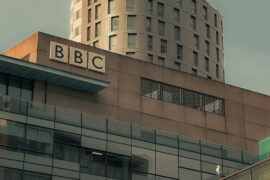
A BBC Director General to take on Netflix but not to root out bias

A BBC Director General to take on Netflix but not to root out bias

THE post of Director General of the BBC has, over the past two decades, become a poisoned chalice.

Greg Dyke was forced out in 2004 by editorial failings in coverage of the war in Iraq; George Entwhistle was disgraced by his mishandling of the Jimmy Savile fall-out in 2012; Tony Hall was engulfed in 2020 by his allegedly dishonest handling of the Panorama interview of Princess Diana, as chronicled in the book Dianarama, and most recently Tim Davie was pushed into resignation in November last year because of gross editorial failings which led to a $5billion (£3.74billion) libel claim against the BBC by President Donald Trump.

Davie’s dramatic exit – he finally leaves at the end of March – has crystallised what is starkly evident to audiences: the BBC’s gravest problem is that its editorial processes are hugely inadequate. Further, that a large and growing proportion of the public no longer trusts the BBC to be impartial or to reflect accurately Great Britain and its values.

Into that breach now steps Matt Brittin. Who? The appointment by the BBC Board – though not yet fully confirmed – is being framed in some quarters as bold. Here is a man forged in the world of Google, who rose to become its president for Europe, the Middle East and Africa. He is steeped in the dynamics of the digital age and obviously plugged into the tectonic shift in audience behaviour towards platforms such as YouTube and Netflix. The BBC is naturally deeply worried by such threats and keen to adapt to the fast-changing media environment. Younger audiences are drifting away; the old certainties of scheduled broadcasting are dissolving; the Corporation fears being left behind.

But Brittin’s appointment suggests a profound – and potentially catastrophic – misdiagnosis of what is wrong.

The BBC’s crisis is not primarily digital. It is editorial. In that context, the most striking fact about Brittin is not what he has done, but what he has not. He has no background in broadcast journalism, no experience as an editor, and no track record in the culture of a newsroom. The BBC Director General is not merely a chief executive: he is, in effect, editor-in-chief of the most powerful news organisation in the country, if not the world. To appoint someone with no grounding in that discipline is astonishing. It goes to the heart of whether the BBC understands its own predicament.

Across almost every major area of public controversy – Brexit, Net Zero, the trans debate, and coverage of conflicts such as Gaza – substantial sections of the audience believe that the BBC has an axe to grind. Bucketfuls of systematic research, which the Corporation refuses to even consider, spell out the extent of the rot. Alternative perspectives are either marginalised or rubbished. One can argue about the fairness of each individual criticism. What cannot be dismissed is their cumulative force.

This massive loss of confidence in BBC integrity is strongly evidenced. Opinion surveys have shown that a majority of the public do not trust the BBC to be impartial, with only a minority believing that it fulfils its core obligation of neutrality.

Yet the BBC complaints process to address such concerns is, in practice, almost entirely ineffective. Over the eight years of this Charter period, News-watch research has shown the BBC has upheld just 38 complaints relating to impartiality out of a total complaints volume running into more than two million. At the same time, Ofcom research has shown overwhelming dissatisfaction with the complaints process itself, with large majorities of respondents expressing little or no confidence in its fairness. Complainants encounter a system that is opaque, defensive and circular: the BBC assesses its own output, on its own terms, and almost invariably finds itself in the right.

External oversight by Ofcom, introduced at the start of the current Charter, has done little to alter that picture. Interventions have been rare, narrowly framed, and confined to individual programmes rather than systemic patterns. The BBC is, to a remarkable degree, judge and jury in its own cause.

Worse still, complacency and head-burying are now entrenched in defence of this chronically dysfunctional system. In December, following an internal editorial review conducted in the wake of the Prescott dossier and other mounting criticisms, the BBC Board chose explicitly to maintain the status quo. Move along there, nothing to see. Despite the massive accumulation of evidence pointing to systemic problems in both editorial culture and complaints handling, it concluded that existing processes were adequate and required no substantive reform. That decision amounted to a doubling down on the very structures that have produced the current crisis.

It is against this background that the cultural dimension of Brittin’s appointment becomes relevant. As former BBC producer and news executive Robin Aitken reported this week, his only media experience is in strongly left-leaning publications. His media-related career began in the late 1990s as head of digital strategy with the Trinity Mirror group. At the beginning of last year, he was appointed a non-executive director of the Guardian Media Group – surely now a conflict of interest. That does not, in itself, disqualify him, but it does matter in an institution already widely perceived as being strongly left-leaning. The BBC does not need a leader who slots into its existing worldview; it needs one who can rigorously challenge it from a position of strength, ability and experience. Dyke, Entwhistle, Hall and Davie all failed because they ducked out on that task.

Here, some insight from those who have worked with Brittin is illuminating. He is described as highly intelligent, ambitious and politically astute, with a strong awareness of hierarchy and status. He could be personally charming when required, but also projected a sense – shared by those around him – that he and his team were operating at a level above the wider organisation. That kind of leadership can be highly effective in corporate environments. But it can also foster a culture that is internally cohesive and sharply cut off from the real world.

And that is precisely where he may fail.

Meanwhile, the political context is shifting in ways that raise the stakes still further. Culture Secretary Lisa Nandy, who is in charge of BBC Charter renewal, has suggested that the next renewal might become permanent, likening the Corporation to the NHS as a national institution to be protected indefinitely. If that were to happen without fundamental reform of accountability, it would entrench the very system that has allowed these problems to develop: a powerful public body, funded by a compulsory levy, operating with minimal effective external scrutiny.

In that light, the central question facing Brittin becomes unavoidable. What is the new Director General for? Is he there to reposition the BBC within a global digital marketplace, competing with Netflix and adapting to the logic of Google? Or is he there to restore trust in the BBC as an impartial national broadcaster, accountable to the public that funds it?

The two tasks are not the same. One is about survival in a changing media economy. The other is about legitimacy and trust in a democratic society.

Brittin may be well equipped to address the first. There is, as yet, little evidence that he has been chosen to confront the second. And until that changes – until impartiality is treated by the BBC not as a slogan but as a discipline, and accountability as a major necessity – the poisoned chalice will remain exactly that.
Will Lisa Nandy take this golden opportunity to end BBC bias?

Will Lisa Nandy take this golden opportunity to end BBC bias?

THE deadline for submissions to the Government’s consultation on the renewal of the BBC Charter has closed.

Culture Secretary Lisa Nandy must now find ways to purge the massive structural bias which has infected the Corporation for decades.

What are the chances that this Government will act in the public interest and improve BBC accountability? Practically nil.

If Nandy opts for the status quo, the BBC will almost inevitably die, drowned in its own complacency, woke agitprop and overt political campaigning on issues such as Net Zero and Brexit.

Former Director of BBC Television Danny Cohen neatly summed up the crisis this week. He said that a succession of editorial controversies has corroded public trust and left the Corporation struggling to maintain the reputation for balance on which its authority has historically rested.

The handling of impartiality, of course, reached crisis point in the autumn when both Director General Tim Davie and BBC News chief Deborah Turness dramatically and ignominiously resigned after they faced mounting evidence of editorial failures contained in the dossier compiled by independent BBC editorial adviser Michael Prescott.

In mid-December the BBC, despite the deluge of evidence of bias, insisted that it would not alter the complaints and accountability system, maintaining that the existing editorial structure and complaints handling processes – in which it acts as its own judge and jury on the vast majority of complaints – already provided adequate scrutiny.

This was the usual BBC bloody-minded intransigence in response to criticism. Carry on regardless.

It is against that background that a major new investigation by my media monitoring organisation News-watch, founded with Kathy Gyngell, submitted to Department of Culture Media and Sport as part of the Charter renewal consultation, has particular significance. The survey painstakingly reconstructs for the first time how complaints about BBC journalism have been handled during the current Charter period, from 2017 to 2025.

The stark facts speak for themselves. The BBC’s handling of complaints is a national disgrace and makes a mockery of audience concerns and accountability.

Between 2017 and 2025 the BBC received 2,275,387 complaints from licence fee-payers. Over the same period Ofcom, the statutory regulator of the Corporation, recorded just four breaches of the Broadcasting Code against the BBC, and only one of those breaches related to the issue that generates the greatest volume of public concern: failures of due impartiality.

Ofcom became the regulatory body overseeing the BBC at the start of the current Charter. The then Conservative Culture Secretary John Whittingdale believed it would make the BBC more accountable. The News-watch survey proves beyond doubt that this was pie-in-the-sky nonsense. Instead the two organisations arguably conspire together to keep the public at bay.

The figures involved have never previously been assembled in a single official account. Finding them took more 1,000 hours of trawling through Ofcom annual reports, BBC publications and hundreds of rulings issued by the BBC’s Executive Complaints Unit. Neither the BBC nor Ofcom – despite the major emphasis in the Charter on impartiality – publishes a coherent, transparent and easily accessible dataset showing how complaints move through the system from initial submission to ruling.

Once the figures are brought together, the structure of the complaints system becomes clear. It is a process in which massive audience concern is progressively filtered through internal stages of review until only a minute number of cases reach regulatory scrutiny.

Out of the more than 2.27million complaints submitted 2017-2025, only 4,944 progressed to the Executive Complaints Unit, the BBC’s final internal appeal body within the BBC First complaints framework. Of those cases, just 200 were upheld or partly upheld under the BBC’s editorial guidelines.

The narrowing continues beyond that stage. 1,071 complaints completed the BBC’s internal process and were therefore eligible for consideration by Ofcom. Yet Ofcom opened formal investigations in only nine cases across the entire eight-year period, resulting in just three breach findings.

The issue becomes even more striking when one examines the subject matter of complaints. Independent research by Cardiff University found that 72.9 per cent of complaints to the BBC in 2025 concerned impartiality. In other words, accusations of bias dominate public concerns about the Corporation’s journalism.

Yet during the whole Charter period Ofcom has upheld just a single breach of the Broadcasting Code against the BBC for failures of due impartiality. The BBC has upheld only 38 from tens of thousands of hours of broadcasting.

The BBC claims this as evidence that its journalism is consistently balanced. But the structure of the complaints system suggests another possibility: that the system itself is incapable of examining the kind of bias critics believe exists.

Under the BBC First model introduced in the 2017 Charter, complaints must normally pass through the Corporation’s internal procedures before Ofcom will consider them. The BBC therefore acts as the initial adjudicator of complaints about its own journalism and the gatekeeper to regulatory review.

In practice, most complaints are resolved internally at early stages of the process, where little information is published about how decisions are reached. Even at later stages the available data remain fragmented and difficult to interpret because the BBC and Ofcom use different definitions and reporting units. Meaningful scrutiny therefore depends on painstaking reconstruction by external observers.

A further limitation compounds the problem. Both the BBC and Ofcom insist that impartiality complaints can normally be examined only in relation to individual programmes or editorially linked series. Allegations that bias arises cumulatively across months or years of output – using academic analytical tools of the type used by News-watch in its surveys of BBC output – are not allowed.

Instead such concerns must be reduced to complaints about single broadcasts, each examined in isolation from the wider editorial context.

News-watch challenged this absurd restriction in judicial review proceedings in 2019 and again in 2025, arguing that systemic bias cannot logically be tested through isolated programme complaints. Incredibly the courts held that the present framework is lawful under the existing Charter. In that vein, change can happen only through Charter renewal and legislation.

The evidence assembled in the News-watch investigation thus establishes that the system is toothless, useless and biased. Ofcom and the BBC often act in tandem, for example in insisting on the single item complaints rule, thus are institutionally incapable of addressing the type of criticism most frequently made against the BBC.

The result is a huge regulatory paradox. The Press – long criticised for weak oversight – now operates under complaints structures that are more visibly independent than those governing the publicly funded national broadcaster.

News-watch argues that Charter renewal provides Parliament with an opportunity to correct this imbalance by introducing a genuinely independent adjudicatory tier for BBC editorial complaints.

The proposal contained in the News-watch submission is straightforward. A BBC Editorial Standards Adjudicator should be established as a body structurally independent of the Corporation. It would examine complaints after the initial BBC response, publish reasoned determinations and maintain a transparent dataset showing how complaints move through the system. Crucially, it would also have the authority to examine patterns of systemic editorial concern rather than being confined to isolated programme items.

Ofcom would retain its existing enforcement powers under the Broadcasting Code, including the ability to investigate and sanction serious breaches. But complaints would first be determined by a body visibly independent of the broadcaster whose journalism is under scrutiny.

Without such reform the consequences may be predictable. A publicly funded institution that cannot convincingly demonstrate impartial scrutiny of its journalism will inevitably see public confidence continue to erode.

In those circumstances the BBC risks being drawn ever deeper into a sea of its own bias. A survey by Ofcom in 2022 found that only 18 per cent of complainants are satisfied by their experience.

That is the issue now facing Nandy as the Charter consultation closes.