Monthly Archives: March 2015

Kathy  Gyngell: In the BBC’s Alice in Wonderland world, criticism by MPs compromises its impartiality

Kathy Gyngell: In the BBC’s Alice in Wonderland world, criticism by MPs compromises its impartiality

Biased Today, biased yesterday and biased tomorrow,  the BBC  has much to answer for over its uncritical and inadequate EU coverage.

More than any other news outlet the BBC shapes and moulds public opinion. Over the years, it has inspired an unwarranted public confidence in the EU. It has been responsible for conveying a sense of the inevitability and necessity of British membership

Had it not so determinedly stuck to its view that the EU was ‘a good thing’,  a fact of life that anyone in their right mind should accept,  Britain might not be in the mess it’s in today.  We might not have uncontrolled immigration; we might be able to deport who we want when we want; and we might still have a vibrant fishing industry. That’s just three of the many areas over which we have lost national authority at great cost.

The  House of Commons all-party EU Scrutiny Committee’s report, published yesterday, which accuses  the BBC of ‘falling down severely’ in its obligation to provide impartial coverage of the EU, raises these questions.

Its findings confirm what many of us have been arguing for years – that BBC coverage of EU matters is deplorable, that it has a ‘concerning’ pro-EU bias, and that Eurosceptics have been given inadequate airtime.  Specifically the MPs criticise Lord Hall for failing in his role as the BBC’s editor-in chief .

All this rings a profound bell with me, just as does the arrogance of the BBC’s response.  The crux of it is that the BBC cannot be criticised because (in their perverse world) any criticism by MPs (however valid it may be) constitutes a breach of the Corporation’s independence. It can’t be seen to follow MPs criticism – no, not even if it is right.

I wonder which Propaganda (sorry Press) Officer there dreamed this excuse up as he pondered the embargoed document before publication? I know that nothing should surprise me but I am amazed that Lord Hall signed off such a response for release. Perhaps for this particular editor-in-chief,  intent and belief are adequate substitutes for whatever is actually broadcast.  During his appearance before the Committee, his claim that the desire for balanced output “ran deep” within the BBC and that he believed that this was being achieved now, sounded like weasel words.  It isn’t being achieved.

This is far from the first time that the BBC has stonewalled criticism about its EU coverage.  I have in my files copies of an ongoing correspondence with Helen Boaden, the then Controller of Radio Four, back in the early 2000s. Like today’s BBC spokesperson, her response that the Corporation provided extensive and impartial coverage of European and Parliamentary issues was (or should be, she thought) sufficient unto the day.

Boaden refused to consider the consistently logged, timed, comprehensive transcript evidence and analysis,  that we (Minotaur Media Tracking) sent her, as evidence.  In her thinking no external monitoring of BBC output could or would ever constitute evidence – however objective or impartial – because the BBC editorial process meant that the BBC was always impartial – and therefore above criticism. It’s surprising to find she has a degree in English literature;  the concept of tautology could not have featured in her studies.

Despite Lord Wilson’s subsequent critical report, despite the cumulative log of evidence of BBC bias by News-watch, despite the fact that this is far from the first time that the BBC has been called to account, the BBC never wavers in it pre-programmed ‘Boaden’-style response. It refuses to harbour any self doubt – not a smidgeon.

Lord Hall has taken a leaf out of Ms Boaden’s book. “As Lord Hall told the committee, we are and will be impartial in all matters concerning our coverage,” the BBC spokesman said.

James Harding, the BBC’s Director of News and `Current Affairs, was not backward in going on the offensive either. His ‘Aunt Sally’ was that if the public was going to trust the BBC to report on politicians impartially it had to be clear that BBC journalists weren’t “asked by politicians to come and account for what they do and in effect do the bidding of those politicians”.

True to form the Today programme thought there was nothing to defend either.

In its own inimitable way yesterday morning’s edition of Today devoted 8 minutes to a Mark Knopfler record plug but nothing to the EU Scutiny Committee’s report that just happened to criticise the BBC on a subject of fundamental importance to every British citizen!

This article first appeared on The Conservative Woman

Photo by John Christian Fjellestad

Lords Debate on European Public Prosecutor’s Office (EUC Report)

Lord Pearson of Rannoch: My Lords, I cannot resist speaking briefly in the gap, because I think this is the first time in 25 years that I am able to congratulate an EU Select Committee on one of its reports, and indeed the Government on their reply.

I also take the opportunity to apologise for scratching last Wednesday 11 March from our debate on the competences review, or balance of power between Brussels and our Government. A long-standing family engagement meant that I could not have stayed to the end—not that I would have asked the Minister, the noble Lord, Lord Wallace, any questions. I would just have explained why the whole exercise is pretty much a waste of time that will do little to curb the appetite of the corrupt octopus in Brussels.

I will, however, take this opportunity to say that I am disappointed that the Minister, the noble Lord, Lord Wallace, took the opportunity—at col.748—to criticise me and my views on the European Union in my absence. The richest bit of this criticism was perhaps that the noble Lord opined that Euroscepticism in this country is a belief, a faith, a prejudice. Yet it is surely our Europhiles who demonstrate a disease-like blind faith in the project of European integration, which is failing before our eyes, causing great misery across the continent, and which will continue to do so until it eventually collapses.

This report and the Government are rightly critical of the Commission’s stubbornness in continuing with its plans for a European public prosecutor. I therefore thought that it might be helpful if I put the powers of the unelected Commission on the record, perhaps for the first time, so that people can see what our powerless national Government are up against.

First, the Commission enjoys the monopoly to propose in secret all EU legislation, and thus a large proportion of our national law.

Secondly, its proposals go for still-secret discussion in COREPER—the Committee of Permanent Representatives, sometimes described as EU ambassadors—where the bureaucrats from the member states negotiate their national interest, the members of the Commission having sworn allegiance to the EU and not to support any partial national interest. I have never understood how our privy counsellors square their oath of allegiance to Her Majesty with that one. That is their problem, I suppose.

Thirdly, when the proposals emerge from COREPER as pretty much a done deal, they go for ratification to the Council of Ministers from the member states, in still largely clandestine discussion, and to the European Parliament, with its powers of co-decision.

Fourthly, our Parliament can scrutinise the emerging legislation but cannot change it. Indeed, it has never done so, as we see with this proposed public prosecutor.

Fifthly, the Commission then becomes the sole enforcer of all EU law and can impose massive fines for transgression, subject only to the Europhile Luxembourg court.

Sixthly, the Commission manages the EU budget so badly that the EU’s accounts have not been signed off by its internal auditors—there being no external auditor—

for the last 19 years. If a public company was in a similar position, its directors would have been in jail many years ago.

Seventhly, the Commission negotiates all our foreign trade arrangements, again badly. Singapore has had free trade agreements with India, China, Japan and the United States for 10 years, but we have none because the Commission is in charge on behalf of all the member states.

I cannot help feeling that if the British people understood the full extent of the unelected Commission’s powers, which I have set out above, and how powerless their Parliament has become in this and other matters, their dislike of our EU membership would increase even further.

I have only one question for the Minister: what happens if the Commission decides to plough on with this proposal?

HL Deb, 19 March 2015, c1186

Department for Business, Innovation and Skills written question

Lord Pearson of Rannoch: To ask Her Majesty’s Government what assessment they have made of the benefit or disbenefit of Single Market legislation to United Kingdom companies which do not export to that market.

Lord Livingston of Parkhead (Conservative): The Department for Business, Innovation and Skills has not carried out any assessment of the benefits or costs of single market legislation to UK companies which do not export to that market.

HL Deb, 17 March 2015, cW

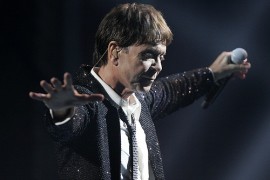
The Cliff Richard affair is damning evidence the BBC cares little for journalistic standards

The Cliff Richard affair is damning evidence the BBC cares little for journalistic standards

The economical-with-the-truth Broadcasting Corporation – that’s the conclusion of a new report into BBC behaviour.

In response, the Corporation has brushed aside without even a flicker of acknowledgement the findings of one of the UK’s most senior policemen over their disgraceful conduct in vastly inflating the importance of the raid last summer by South Yorkshire Police on the home of Sir Cliff Richard.

This is despite the fact that former chief constable Andy Trotter, who retired in 2014 from his final role as head of the Transport Police, is one of the UK’s leading experts in handling the press.   Trotter cut his teeth in this sector at the Ladbroke Grove train disaster, and at his retirement was the Association of Chief Constables’ lead on media relations.

On that basis, his credentials in terms of understanding the needs of the press and the delicate complexities in the flow of information from the police to the outside world are impeccable. They were honed in the white-hot crucible of deeply tragic events such as 7/7 and at the highest levels of policing.

Trotter was asked by the police commissioner in South Yorkshire to investigate the raid on Sir Cliff.

As I have previously reported extensively on TCW, the raid went ahead despite being based on the flimsiest of evidence, and – even more disturbing – in full collusion with the BBC who treated it as a major news event, complete with helicopter shots. The scale of the coverage conveyed the impression that the singer had been convicted of major crimes.

Leading human rights barrister Geoffrey Robertson, whose leftist sympathies would normally make him an ally of the Corporation, was so outraged by the BBC’s conduct that he described it as a ‘conspiracy to injure’ the singer.

The BBC’s response, of course- as it always is – was to deny with sullen insolence any wrongdoing. In their stance, they were unfortunately aided and abetted by the publicity-seeking Labour MP Keith Vaz, chair of the Commons Home Affairs Committee. He conducted an over-hasty inquiry with incomplete evidence and decided that the over-the-top elements of the raid were all the fault of the police.

Subsequent leaks of   conversations between the police and the most senior BBC news management figures involved in the raid show that Vaz’s conclusions were nonsense – the BBC, in effect, conspired with the South Yorkshire cops to make it a no-holds-barred news circus, the impact of which was bound to damage and humiliate Sir Cliff to the maximum extent.

Trotter’s report on the events has not been formally released. It has been obtained as the result of a freedom of information requests and accounts are now available in the Yorkshire Post and the Daily Mail.

According to both, Trotter is deeply scathing about South Yorkshire police’s actions for breaking basic media-relations police rules, and says that officers should never even have even confirmed to the BBC that they were investigating Sir Cliff. The decision to work with the Corporation in planning the raid was therefore wholly wrong.

But his conclusions about the BBC are even more damning.  According to the Yorkshire Post report, Trotter decided that the Corporation’s account of events simply does not add up. He believes they effectively conned the South Yorkshire Press Office into working them with them on the story by not being straightforward about their sources.

Of course, journalism is to some extent about wheeling and dealing and the darker arts of persuasion. But here, it seems, the BBC was hell-bent on nailing Sir Cliff – irrespective of the strength of the evidence – and therefore they conned the force into panic reactions. What happened subsequently has been described as ‘shocking collusion’ to besmirch the singer’s reputation.

Trotter has made six recommendations for change about how South Yorkshire Police should deal in future with press relations and all have been fully and instantly accepted.

The BBC, however, does not give a damn.  Its response to his report is that Keith Vaz found no evidence of BBC misconduct or errors of judgment and therefore they have no response whatsoever to his allegations. That amounts to arrogant complacency.

In other words: Car crash? What car crash? BBC lawyers have, it can be guessed, advised Lord Hall and his senior management that if they admit anything, it will open the doors for Sir Cliff to claim very substantial damages. That could be on the cards.

But that’s not the point. The BBC Trustees are charged to ensure that in return for its massive public financing, the Corporation acts with integrity and the highest journalistic standards. As the full picture of BBC conduct in this sordid affair gradually unfolds it is clear that this is emphatically not the case. But not only that: they don’t give a damn about standards.

The Guardian, predictably, is trying to exonerate the BBC for the way they behaved by splitting hairs over the implications of what the Trotter report actually  said– but the overall facts speak for themselves. This was disgraceful conduct.

Photo by Music News Australia

Springshot: The Great European Disaster Movie

Springshot: The Great European Disaster Movie

Scratch the surface of almost any BBC statement about ‘impartiality’ or ‘bias’ and you unearth a rather an unpleasant smell.

The BBC says no EU money was used in the making of its Sunday night pro-EU extravaganza The Great European Disaster Movie, which depicted  in ludicrous, extremist terms  the total disintegration of civil society across the continent, if, God forbid, the EU was forced out of existence.

Note the weasel words: ‘in the making of’. The reality is that post-production, the film-makers Bill Emmott and Annalisa Piras – both of whom are pro-EU fanatics – have told the outside world they are receiving EU money for the transmission of the film in other languages. So put another way, it is an EU propaganda project.

And the BBC were co-producers of that film.

What’s also not clear is who did fund the project. It was made by Piras’s company Springshot Productions, and that means its financing is totally opaque. Things here don’t add up. It’s unlikely that the budget of a project of such scale and production standards would be anything less than £1m, and yet Springshot is tiny. According to the company website, it has made only one other film, two years ago.

The point here is that it is only larger production companies turning over millions a year that can afford to make glossy hypothetical dramas – and they don’t generally make money, which is why they are so relatively scarce. Someone with deep pockets and a deep desire to spread massively pro-EU propaganda was behind it. The BBC should tell us who this was so we can make up our own minds about the decision to show it.

It seems that someone, somewhere in the higher echelons of the BBC hierarchy has a guilty conscience, because immediately after it was shown, a very rare occurrence happened, the BBC equivalent of a Blue Moon. In a Newsnight special hosted by Robert Peston,  two genuine EU ‘come outers’, Mark Reckless, the Ukip MP, and Peter Hitchens, the Mail on Sunday columnist, were fleetingly allowed to make some of the arguments in favour of withdrawal and to explain why the claims by Emmott and Piras were preposterous.

Unlike the unremitting one-sidedness of the film, the views of Reckless and Hitchens were of course offset, notably by a spokesman of the Greek Marxist party Syriza, who agreed with Emmott in ascribing all the current massive economic problems of the EU to nasty ‘austerity’.

There are other BBC-related problems in this film which only surface with digging. Emmott, a former editor of the Economist, and Piras, an Italian who worked as a foreign correspondent in London for many years, are clearly united in their huge desire to ram the need for the EU down our throats.

They are so fanatical that they have set up an organisation called The Wake Up Foundation, a so-called charity, the main aim of which – though clothed in high-flown language – is as another vehicle to spread their EU bile. A feature by Emmott on their website in which he compares Nigel Farage to Silvio Berlusconi typifies the approach.

Far more concerning about the Wake Up Foundation, however, is that one of its trustees is Richard Sambrook, who is a former head of BBC newsgathering and Director of News, who was moved sideways to the World Service at the end of his BBC career because of question marks in some quarters in his judgment relating to the BBC’s handling of the fall-out from the Iraq war.

Sambrook, after a spell as a public relations advisor, re-surfaced as a Professor of Journalism at Cardiff University.  His department was commissioned by the BBC Trustees in 2011 to conduct research linked with the Stuart Prebble inquiry into whether the BBC was covering EU-related issues in accordance with the Charter.

That research, as has been reported by Kathy Gyngell on TCW, was ineptly conducted and as a result gave the wholly false impression that BBC news programmes gave adequate coverage to eurosceptic and withdrawalist opinion. Not only that, the main person who conducted the research had recently received a substantial slug of EU cash from the EU for a project designed to ascertain how the EU might better project itself.

So, put another way, the BBC commissioned a rabidly pro-EU programme from a programme making duo who have close professional and organisational links with a former Director of BBC News who, in turn, has been appointed by the Corporation to tell the outside world – on a supposedly ‘objective’ basis – how balanced and impartial the BBC’s output in relation to the EU is.

The linkage raises several awkward questions.  Was Sambrook directly involved in the making of the European Disaster Movie? Was he involved in any way in persuading the BBC to show it and to become co-producers? To what extent is he involved in the dissemination of the pro-EU propaganda of the Wake Up Foundation? Were the BBC aware of his links with Emmott when they commissioned his department to do the Prebble survey?

Something in the state of Denmark, if not rotten, smells very fishy indeed.